

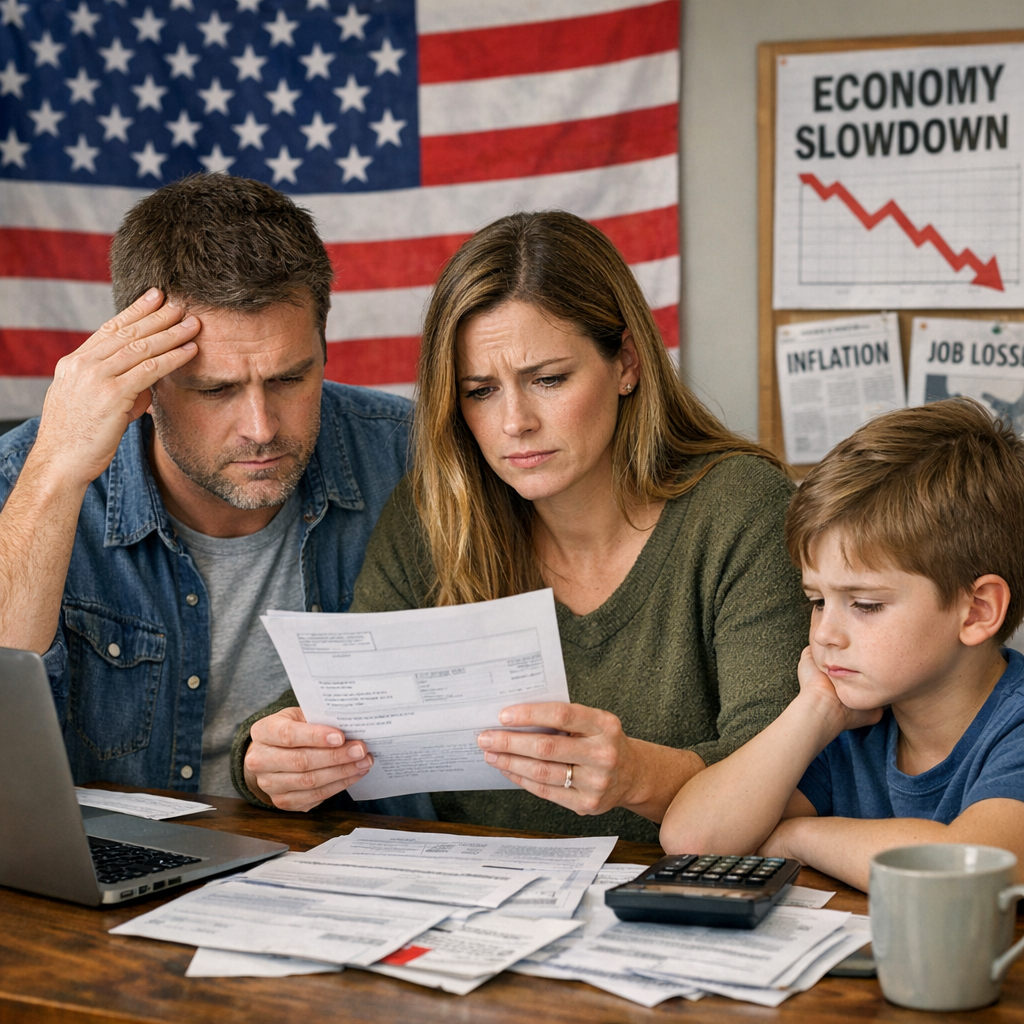
From Inver Grove Heights to Washington, D.C., one thing connects voters: anxiety about the economy. Despite modest growth and stability in some sectors, many people across the U.S. still worry that they’re falling behind—not keeping up.
Signs of Strain
Recent data show mixed economic signals. The unemployment rate sits around 4.1%, and the economy continues to grow—but inflation remains well above target levels. PCE inflation, the Fed’s preferred measure, has hovered in the 4% range. Elevated energy prices tied to global events are contributing heavily to cost pressures, especially for everyday purchases. PCE inflation rose notably in recent months… Unemployment rate 4.1% Economic data snapshot: CPI +3.4% year over year… Real GDP rose modestly.
How It Feels for Individuals
Many Americans report concern about the cost of basics. Health care, housing, food, energy—these are no longer fringe issues. A Pew Research survey found that majorities say the affordability of health care, the price of goods, and housing costs are top economic concerns. Cost of health care and housing top concerns. Meanwhile, Gallup reports economic confidence is at its weakest point since 2022. Economic confidence sinks; worst since 2022.
Politics in the Balance
These economic worries are shaping political opinion and behavior. Voters are more likely to consider economic issues like inflation and price stability when choosing candidates. Poll: Economy and high prices most cited problems influencing midterm votes. Approval for the current administration’s handling of inflation is low, even among some partisan supporters. Only about 29% approve of Trump’s handling of inflation. And while neither major party holds a clear advantage on economic issues—according to recent polling—how they address affordability may be the deciding factor this election cycle. Neither party has a firm edge on economic issue handling.
Watching Forward
Looking ahead, several variables could shift the picture. Oil price fluctuations, global supply chain disruptions, and decisions by the Federal Reserve (especially around interest rates) are key to whether inflation eases or stays stubborn. Wage growth remains weak relative to rising costs in many places—if this doesn’t improve, discontent likely will rise. Political campaigns are already framing messaging around who can deliver price relief and stability.
For communities like ours in Dakota County, the national economic climate isn’t abstract—it affects how far your paycheck stretches, whether you worry about health bills, or what local businesses can afford. And, increasingly, it’s shaping not just votes—but everyday life.