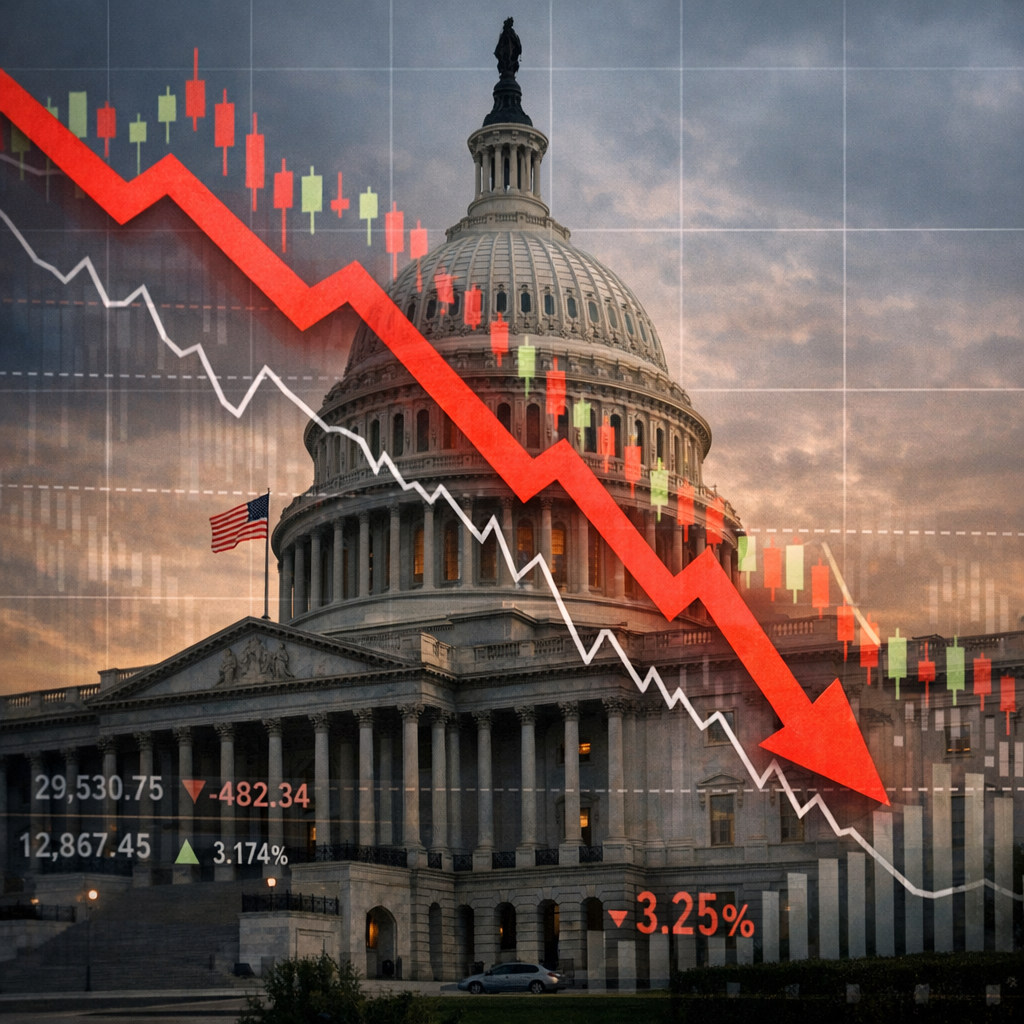
The United States’ national debt has been a topic of increasing concern among economists and policymakers. As of early 2026, the debt has surpassed $38 trillion, prompting discussions about its potential impact on the economy.
Current State of the National Debt
In January 2026, BlackRock CEO Larry Fink highlighted the growing national debt, emphasizing that markets might be underestimating the moment when fiscal policy becomes a significant issue. He noted that rising debt levels could lead to increased interest costs, threaten investor confidence, and potentially trigger rapid shifts in borrowing costs.
Economic Implications
The International Monetary Fund (IMF) has described the U.S. economy as “buoyant,” projecting a 2.4% growth in GDP for the fourth quarter of 2026. However, the IMF also warned that substantial federal budget deficits pose a growing stability risk. The organization emphasized the need for fiscal discipline to ensure long-term economic stability.
Potential Future Scenarios
Experts suggest that sustained economic growth could help improve the debt-to-GDP ratio. Fink believes that maintaining a 3% growth rate would be beneficial in this regard. However, without appropriate fiscal measures, the rising debt could lead to higher interest rates, reduced public spending, and potential challenges in funding essential services.
Conclusion
While the U.S. economy shows signs of strength, the escalating national debt remains a critical issue. It is essential for policymakers to address this challenge to ensure long-term economic health and stability.