

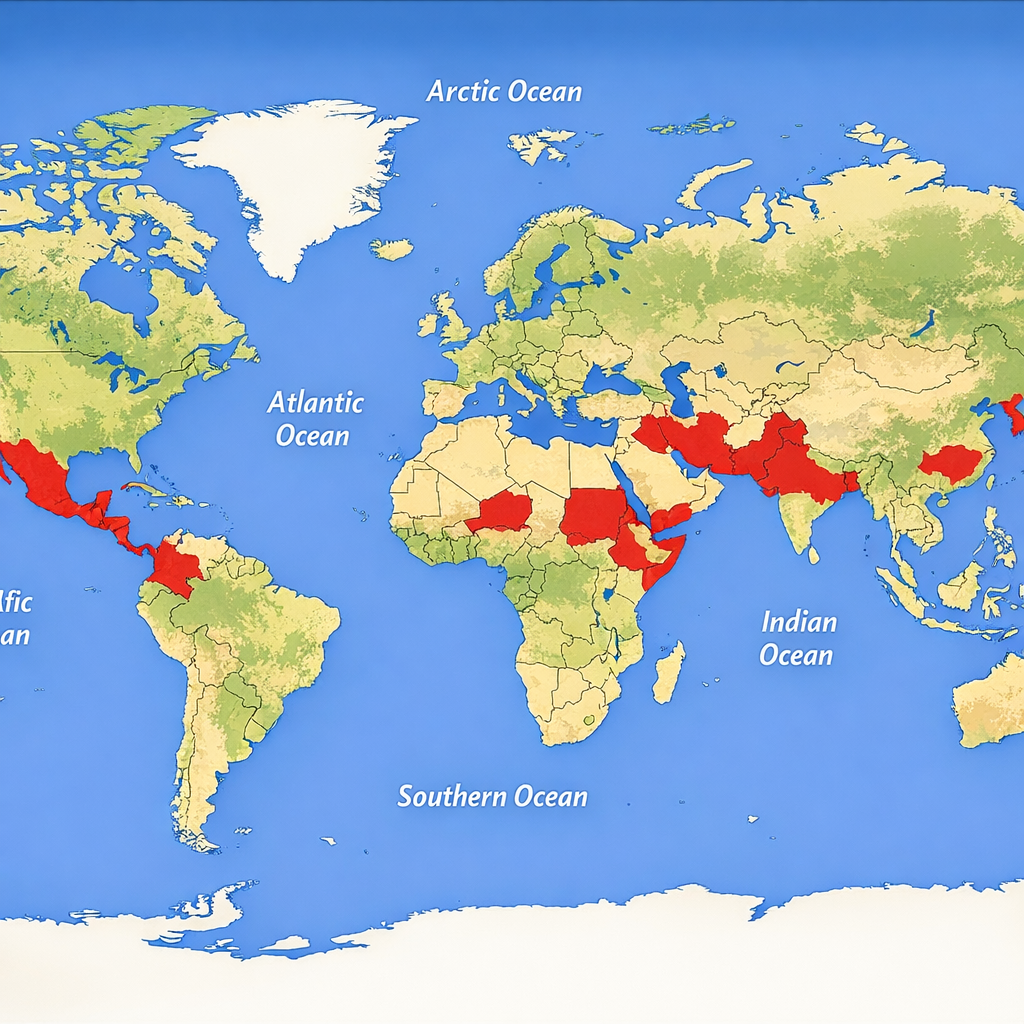
From Gaza to Ukraine, Sudan to the Red Sea, multiple armed conflicts are stretching the limits of international diplomacy—and causing ripple effects that reach even distant communities like Inver Grove Heights. Global violence has surged to levels unseen since the mid-20th century, bringing not just tragedy, but broad economic, geopolitical, and humanitarian challenges.
What’s fueling the rise in armed conflict?
Experts point to several overlapping drivers:
- State‐to‐state and proxy wars: These have increased significantly. Even as most conflicts remain internal, the number of confrontations between states is once again climbing. Wars in Ukraine, interstate tensions in the Middle East, and confrontations in areas surrounding Iran are examples. The Institute for Economics and Peace and Peace Research Institute Oslo both identify this trend.
- Uneven climate and resource pressures: Shifts in climate are making droughts, floods, and displacement more common, adding stress to regions already strained by economic and political instability. Many international agreements now emphasize energy transitions and resilience planning.
- Weak governance and regional instability: In places with fragile political institutions or recent civil conflict, groups are quicker to mobilize. Failed or partially collapsed states, or areas with overlapping authority, often become breeding grounds for protracted violence. Observers note that civil conflicts still account for most fatalities, though state‐level confrontations are surging.
Who’s most affected?
Global data reveals certain patterns:
- High casualty zones: Ukraine remains one of the deadliest conflicts, with tens of thousands of conflict‐related deaths in each recent year.
- Widespread displacement: Millions are uprooted in conflicts in the Middle East, Africa, and Asia—often fleeing violence, lack of access to healthcare, or loss of livelihoods. Humanitarian needs are rising fast.
- Collateral damage and health systems under attack: Health facilities are being damaged or shut down, complicating response to combat injuries and outbreaks of infectious disease. WHO reports dozens of verified attacks on health care in conflict areas, especially in the Middle East.
Global implications—and local relevance
The consequences extend far beyond frontlines:
- Economic disruption: Conflict zones often see drops in trade, investment, and government revenue. Global commodity and energy markets hang in the balance when Gulf chokepoints or major oil‐producing countries are destabilized.
- Fragmented climate action: Global climate agreements depend on cooperation. Violence complicates the delivery of clean energy, infrastructure, and resilience, especially in poorer regions. Commitments like reducing energy intensity and increasing renewable electricity share are often slowed by instability.
- Impacts for peace policy and foreign aid: Donors and nations are questioned about where to prioritize relief, peacekeeping, and diplomacy. The traditional global peacemakers are challenged by regional actors taking on more of the burden—or stepping into voids left by declining Western influence.
- Local connections—even in Minnesota: Conflict and economic instability around the world mean higher refugee resettlement, shifts in global prices for food and fuel, and changing geopolitics that affect trade and foreign policy. Communities here may feel these effects in subtle but real ways.
What to watch going forward
To understand whether things might improve—or get worse—keep an eye on several indicators:
- New conflict escalation or ceasefires (especially in Ukraine, the Middle East, the Sahel).
- Government transitions: elections, coups, or leadership change in fragile states.
- Climate‐related migration and how receiving countries respond.
- How international bodies are adapting: like the UN, WHO, and new initiatives for climate finance and transparent reporting.
Global conflicts are not distant headlines. They shape economies, communities, and moral imperatives everywhere. As violence proliferates, the task becomes not just counting wars—but building sustainable responses rooted in peace, justice, and shared responsibility.