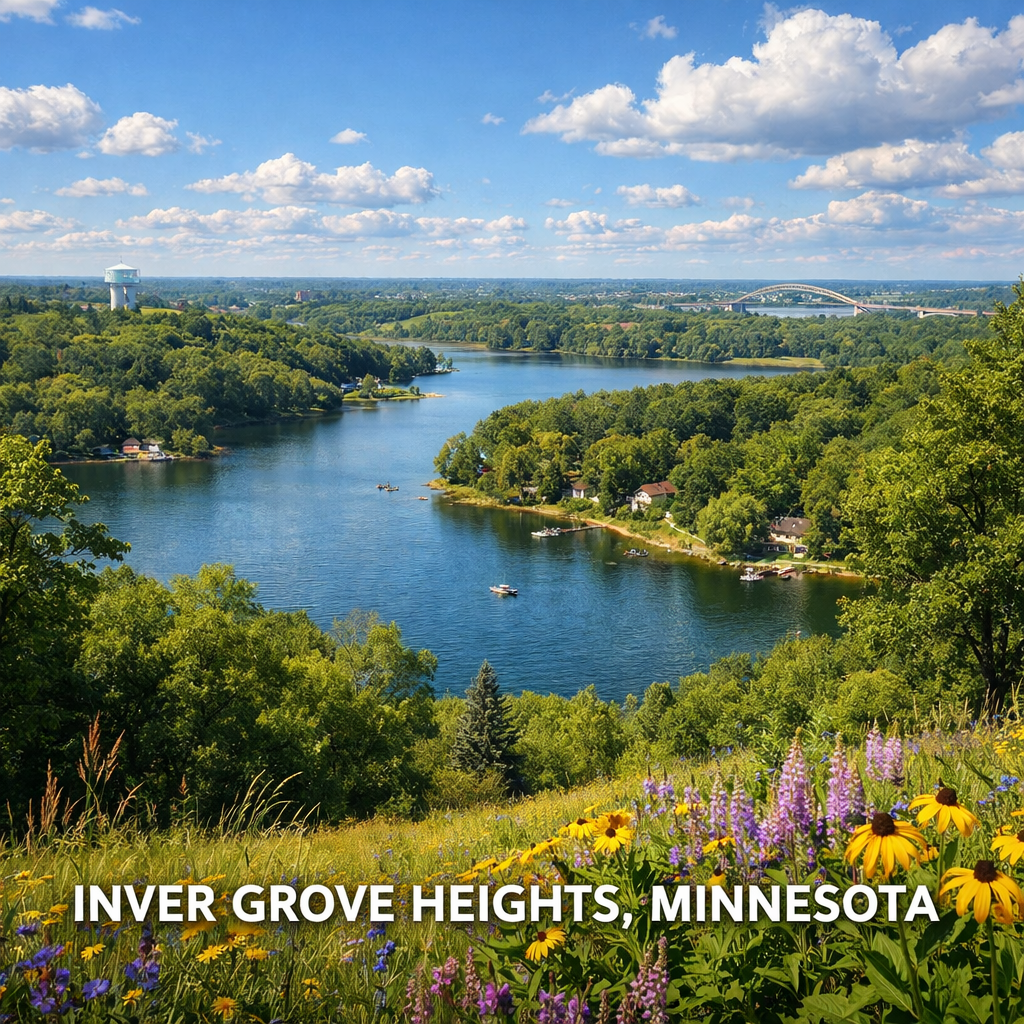
Inver Grove Heights, Minnesota, experiences a humid continental climate characterized by significant seasonal variations. Residents encounter warm, wet summers and cold, snowy winters, with temperatures ranging from an average high of 82°F (28°C) in July to an average low of 10°F (-12°C) in January. Annual precipitation averages around 34 inches (86 cm), contributing to the region’s lush landscapes.
Seasonal Weather Patterns
Summers in Inver Grove Heights are typically warm and humid, with July being the warmest month. Winters are cold and snowy, with January as the coldest month. Spring and fall serve as transitional periods, offering milder temperatures and varying precipitation levels.
Environmental Initiatives
The city is proactive in addressing environmental concerns through various initiatives:
Environmental Advisory Commission
The Environmental Advisory Commission (EAC) comprises nine citizen members appointed by the City Council. The EAC reviews environmental issues, including land alteration permits and wetland replacement applications, and promotes public awareness of local environmental matters. Meetings are held as needed on the fourth Thursday of each month at 7 p.m. in the City Council Chambers.
Water Resource Management
Inver Grove Heights is home to over 630 lakes and wetlands and borders the Mississippi River. The city emphasizes the importance of protecting these water resources. Residents are encouraged to redirect water runoff to gardens and permeable areas to prevent pollutants from entering stormwater drains, which flow directly into local water bodies.
Data Center Moratorium
In response to community concerns about the environmental impact of data centers, including water usage and energy consumption, Inver Grove Heights enacted a temporary moratorium on data center construction. This decision reflects the city’s commitment to evaluating the ecological implications of such developments.
By understanding the local climate and participating in environmental initiatives, residents of Inver Grove Heights can contribute to the sustainability and well-being of their community.