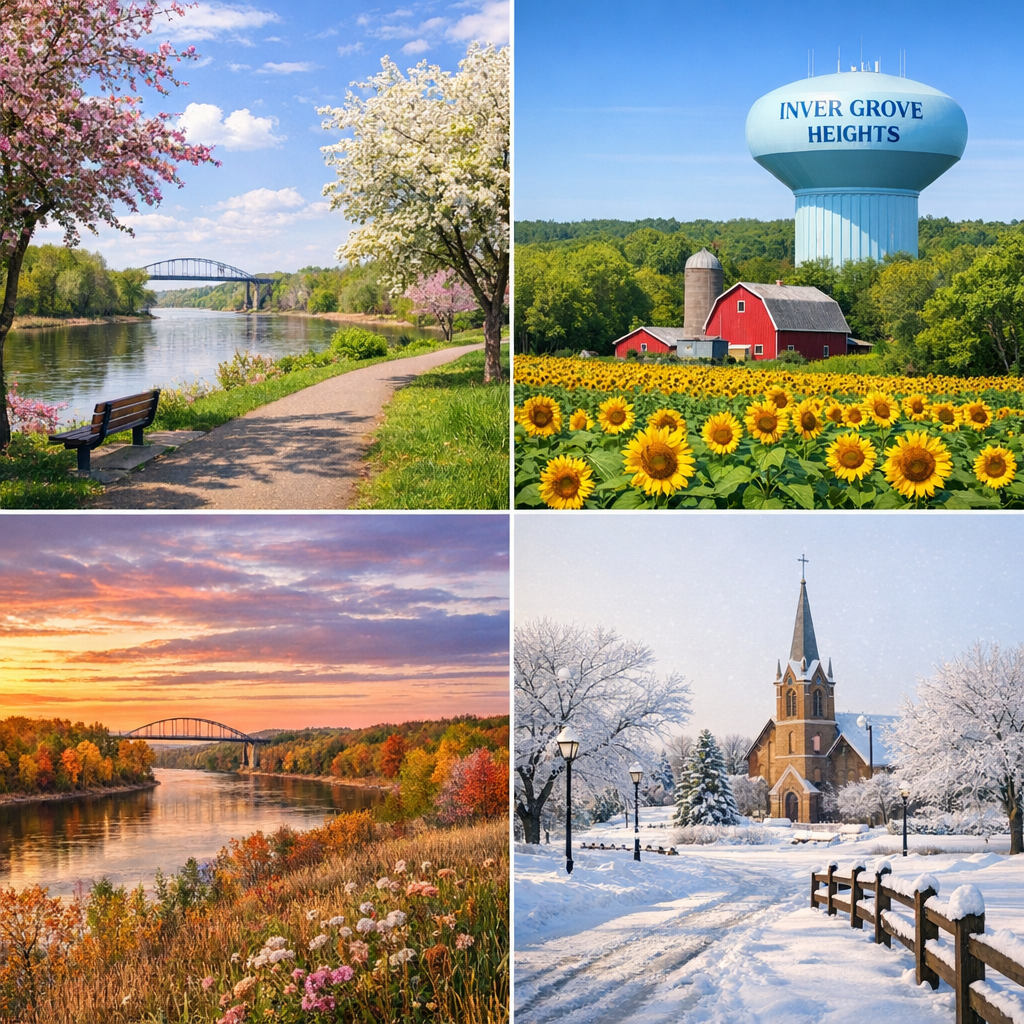
Inver Grove Heights, located in Minnesota, experiences a humid continental climate characterized by significant seasonal variations. Residents encounter warm, wet summers and cold, snowy winters, with temperatures ranging from an average low of 10°F in January to an average high of 82°F in July.
Seasonal Weather Patterns
The warm season spans approximately from late May to mid-September, with daily high temperatures averaging above 71°F. July stands out as the warmest month, boasting average highs of 82°F and lows of 64°F. Conversely, the cold season extends from late November to early March, featuring daily high temperatures below 36°F. January is typically the coldest month, with average lows of 10°F and highs of 25°F.
Precipitation is fairly evenly distributed throughout the year, with June being the wettest month, averaging 3.74 inches of rainfall. January is the driest, receiving about 0.67 inches. Snowfall is prominent during the winter months, with February averaging the highest snowfall at 5.91 inches.
Environmental Initiatives
Inver Grove Heights is proactive in addressing environmental concerns through its Environmental Advisory Commission (EAC). This nine-member citizen commission, appointed by the City Council, reviews various environmental issues, including land alteration permits, wetland replacement applications, and landfill matters. The EAC also promotes public awareness and understanding of local environmental issues. Meetings are held as needed on the fourth Thursday of each month at 7 p.m. in the City Council Chambers.
Residents are encouraged to participate in these meetings to stay informed and contribute to the city’s environmental efforts. The EAC’s initiatives aim to ensure that Inver Grove Heights remains a sustainable and environmentally conscious community.
Understanding the local climate and engaging in environmental initiatives are crucial for residents to adapt to seasonal changes and contribute to the well-being of the community. Staying informed about weather patterns and participating in local environmental programs can help mitigate the impacts of climate variability and promote a healthier environment for all.