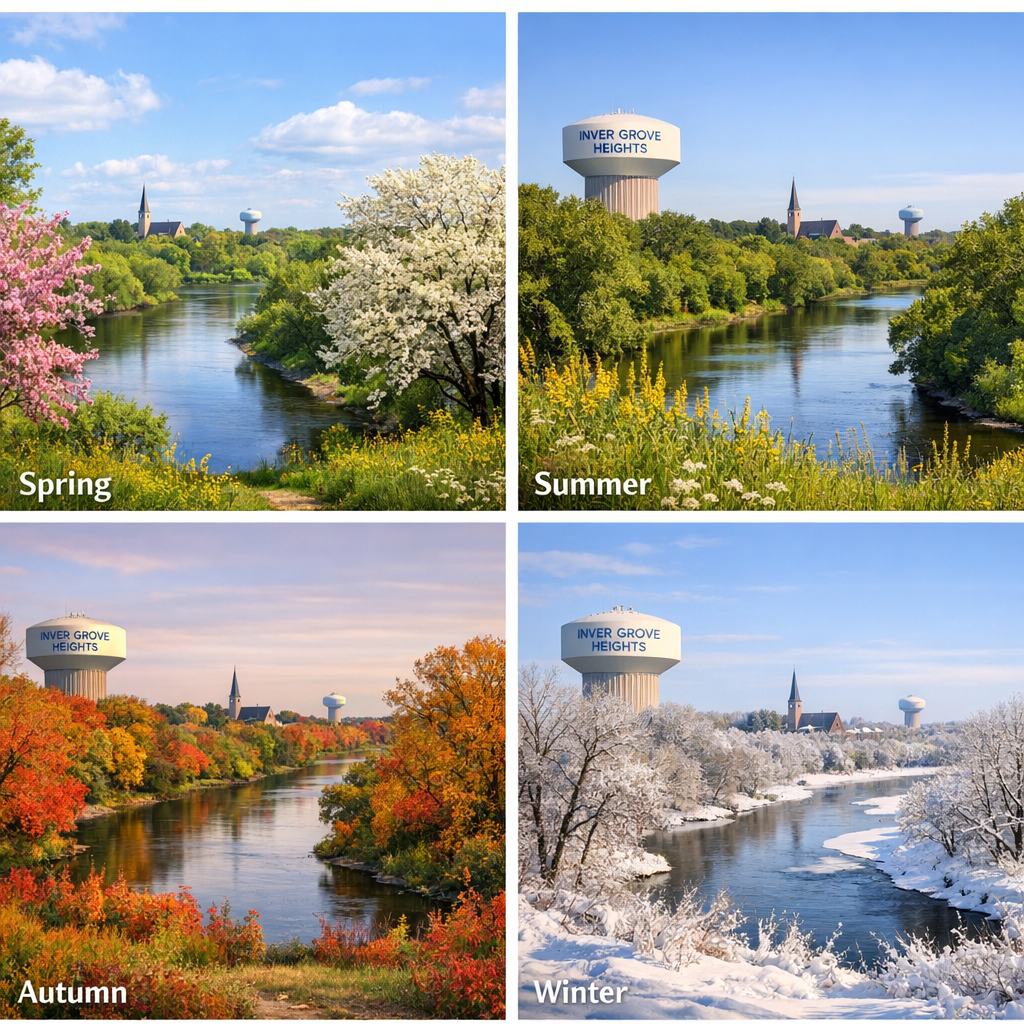
Inver Grove Heights, Minnesota, experiences a humid continental climate, characterized by significant seasonal temperature variations and consistent precipitation throughout the year. Understanding these patterns can help residents and visitors prepare for the diverse weather conditions.
Winter (December to February)
Winters are cold and snowy. Average high temperatures range from 23.4°F in January to 28.2°F in February, with lows dipping to 7.3°F in January. Snowfall is common, contributing to the season’s chilly ambiance.
Spring (March to May)
Spring brings a gradual warming trend. March sees average highs of 40.7°F, increasing to 68.1°F by May. This season also marks an uptick in precipitation, with May averaging 4.25 inches of rainfall, supporting the blooming flora.
Summer (June to August)
Summers are warm and humid. July stands as the warmest month, with average highs reaching 82.5°F and lows around 63.5°F. Rainfall remains steady, averaging 4.31 inches in July, often resulting in lush, green landscapes.
Autumn (September to November)
Autumn features a cooling trend and vibrant foliage. September’s average high is 72.5°F, dropping to 42.2°F by November. Precipitation decreases, with November averaging 1.73 inches, as the region prepares for winter.
Overall, Inver Grove Heights’ climate offers a full spectrum of seasons, each with its unique characteristics. Staying informed about these patterns ensures readiness for the year’s weather variations.