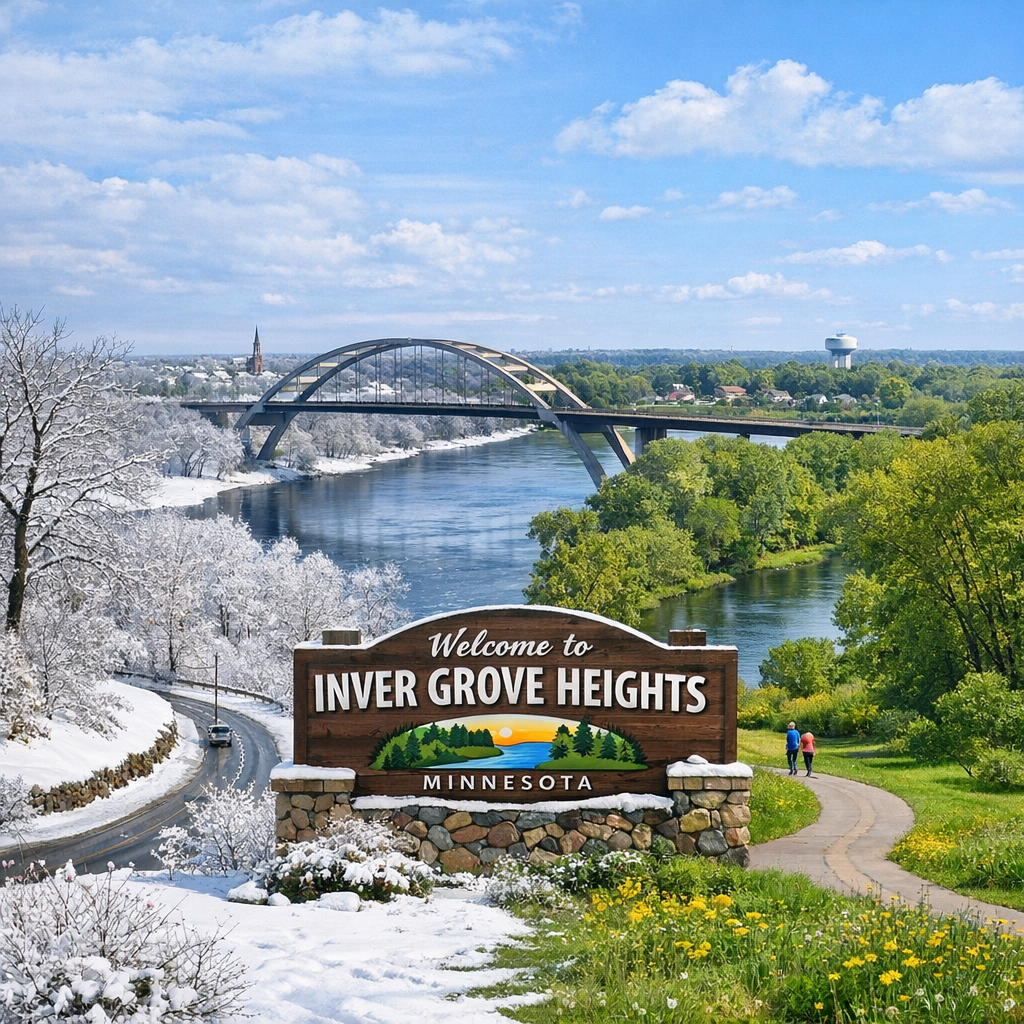
Inver Grove Heights, Minnesota, experiences a humid continental climate, characterized by significant seasonal temperature variations and consistent precipitation throughout the year. Understanding these patterns can help residents and visitors prepare for the diverse weather conditions encountered in the area.
Seasonal Temperature Variations
The city undergoes distinct seasonal changes:
- Winter (December to February): Temperatures often drop below freezing, with average lows around 10°F (-12°C) in January, the coldest month. Snowfall is common, contributing to the region’s winter landscape.
- Spring (March to May): A gradual warming trend occurs, with average highs reaching 68°F (20°C) by May. This season also brings increased rainfall, supporting the blooming of local flora.
- Summer (June to August): Warm and humid conditions prevail, with average highs peaking at 82°F (28°C) in July. Thunderstorms are more frequent during these months, contributing to the annual precipitation.
- Autumn (September to November): Temperatures cool down, with average highs decreasing from 72°F (22°C) in September to 42°F (6°C) in November. Fall foliage adds vibrant colors to the local scenery.
Precipitation and Humidity
Inver Grove Heights receives an average annual precipitation of approximately 34 inches (864 mm), distributed fairly evenly throughout the year. June tends to be the wettest month, averaging around 5 inches (127 mm) of rainfall. Humidity levels fluctuate seasonally, with higher relative humidity during the winter months, averaging around 90% in January, and lower levels in the spring, averaging around 72% in April.
Sunshine and Daylight
The city enjoys varying amounts of sunshine and daylight throughout the year. July offers the most sunshine, with an average of 11.7 hours of daylight per day, while November has fewer sunny hours, averaging around 3.8 hours daily. Daylight duration ranges from approximately 8 hours and 50 minutes in December to about 15 hours and 31 minutes in June, reflecting the significant seasonal shifts typical of northern latitudes.
Preparing for the Climate
Residents and visitors should be prepared for the full spectrum of weather conditions. Winter necessitates warm clothing and readiness for snow, while summer calls for lighter attire and awareness of potential thunderstorms. Spring and autumn offer milder conditions but can be unpredictable, so layering is advisable.
By understanding the climate patterns of Inver Grove Heights, individuals can better plan their activities and ensure comfort throughout the year.