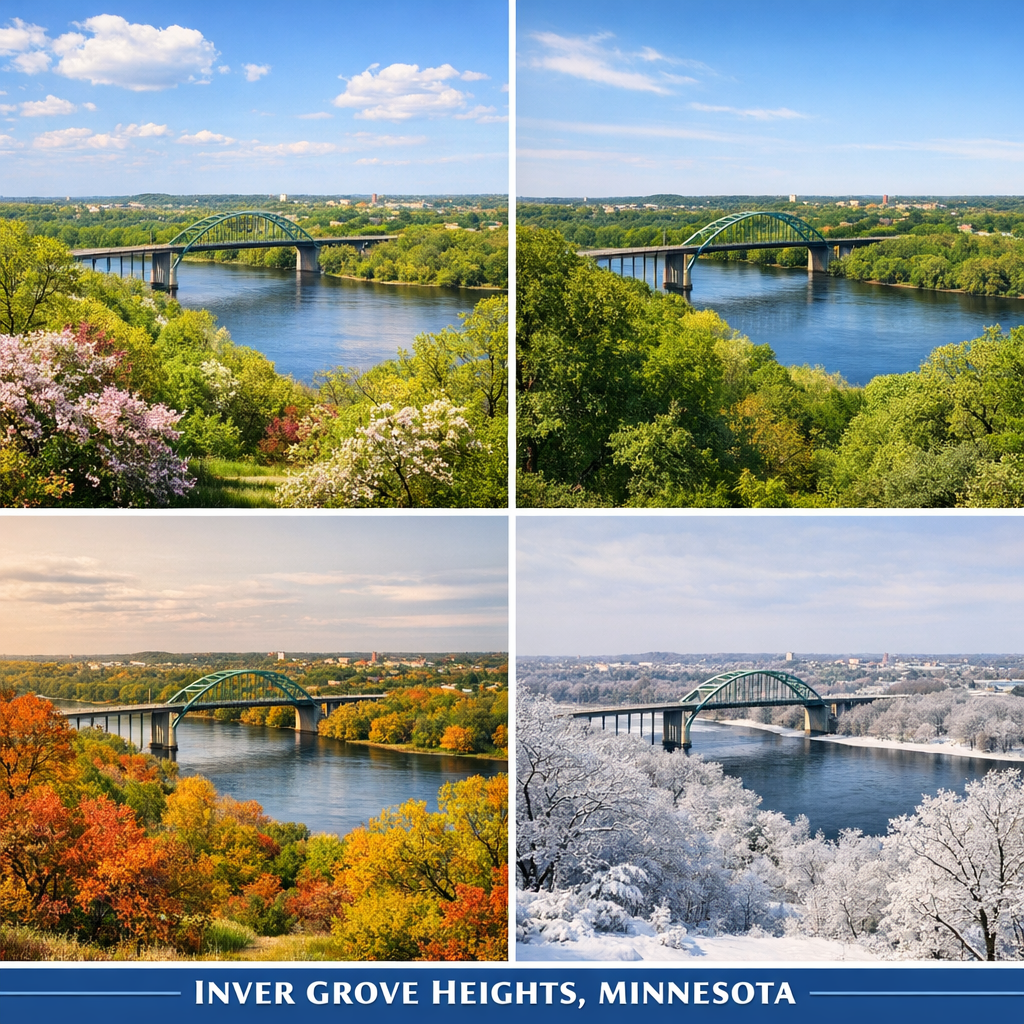
Inver Grove Heights, Minnesota, experiences a humid continental climate characterized by significant seasonal temperature variations and moderate precipitation throughout the year. Understanding these patterns can help residents and visitors prepare for the diverse weather conditions typical of the region.
Temperature Variations
The area experiences a wide range of temperatures annually. Summers are warm, with average high temperatures reaching around 82°F (28°C) in July, the warmest month. Winters are cold, with average lows dropping to approximately 10°F (-12°C) in January, the coldest month.
Precipitation Patterns
Precipitation is distributed throughout the year, with June being the wettest month, averaging about 3.74 inches (95 mm) of rainfall. January is typically the driest month, receiving around 0.67 inches (17 mm) of precipitation.
Seasonal Highlights
Spring (March to May)
Spring brings a gradual warming trend, with average high temperatures increasing from 42°F (6°C) in March to 68°F (20°C) in May. This season also sees an uptick in precipitation, supporting the blooming of local flora.
Summer (June to August)
Summers are warm and humid, with average highs peaking at 82°F (28°C) in July. This period also experiences the highest rainfall, contributing to lush green landscapes.
Autumn (September to November)
Autumn features a gradual cooling, with average highs decreasing from 72°F (22°C) in September to 42°F (6°C) in November. The season is marked by vibrant fall foliage and a decrease in precipitation.
Winter (December to February)
Winters are cold and snowy, with average lows around 10°F (-12°C) in January. Snowfall is common, creating picturesque winter scenes and opportunities for seasonal activities.
By understanding these seasonal patterns, residents and visitors can better prepare for the weather conditions unique to Inver Grove Heights throughout the year.