

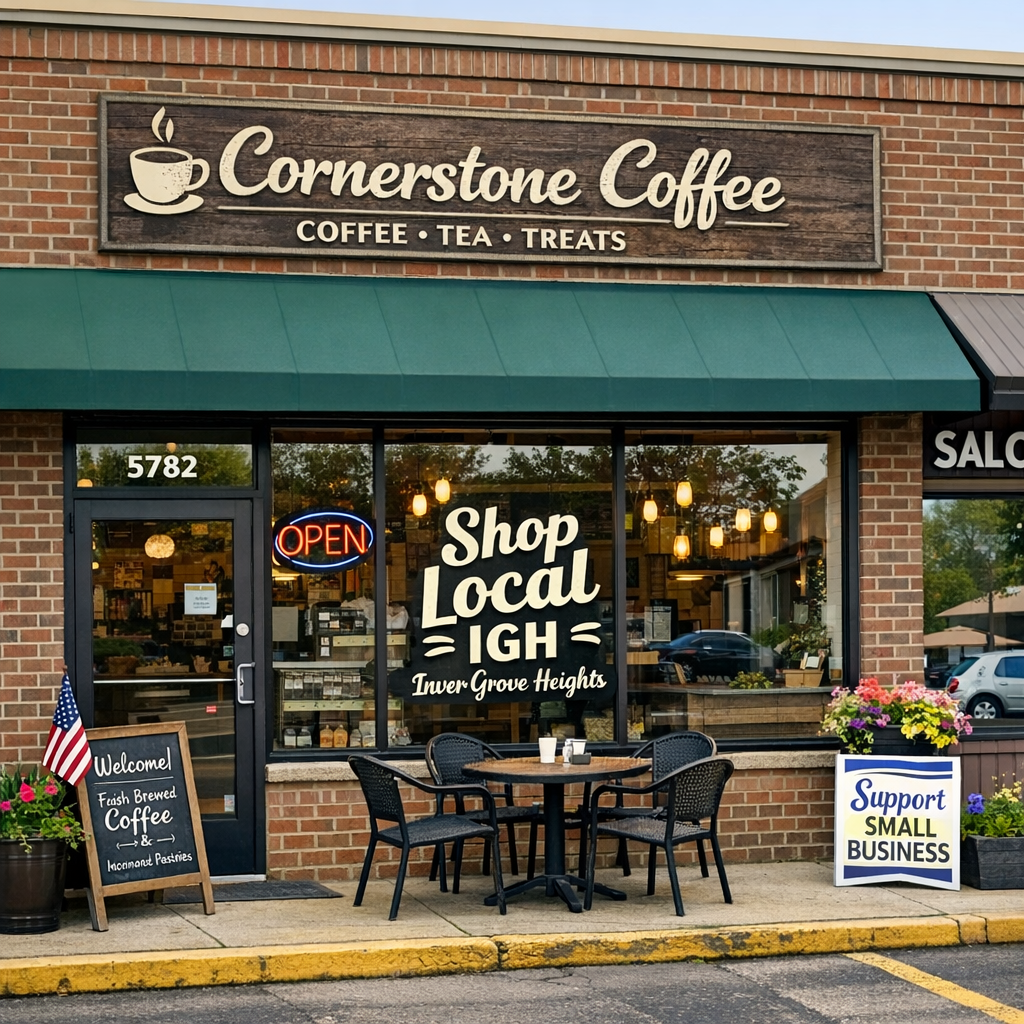
Inver Grove Heights sits at a crossroads of potential—between its substantial land supply, prime transport corridors, and a growing mix of small and large employers shaping the local economy. To stay ahead, residents, entrepreneurs and officials must understand where the city offers strength, where gaps persist, and how to build a future that supports both jobs and quality of life. Here’s a guide to the city’s economy and what those of us living or working here should know.
Business Landscape & Major Employers
Some large firms anchor the city’s economic identity. CHS Inc. (Cenex) is by far the top employer in many reports, employing over 2,300 workers in IGH—roughly 12% of local employment. Evergreen Industries is another major player with more than 1,200 jobs. Other notable employers include the local school district (ISD 199), the gardening giant Gertens, and the city government itself. Smaller ventures dominate in number: most of the nearly 1,700 businesses employ fewer than 20 people, reflecting a vibrant small-business ecosystem. Average wages in the ZIP areas covering IGH have been estimated at around $75,000–$80,000, notably above several county averages.
Labor Market Trends & Challenges
State and county statistics show a mixed picture: while employer establishments continue to increase slightly, employment in Dakota County—where IGH lies—declined by about 1% over one recent period. Unemployment in the county is lower than the state average, sitting near 3.6%. However, many businesses report ongoing difficulty filling certain roles despite positive wage trends.
Which Sectors Are Leading & Where There’s Opportunity
The local economy demonstrates strong clustering in healthcare, professional and technical services, retail trade, construction, and food and accommodation. These sectors are among the largest employers in IGH’s ZIP-code-based areas. Average business size remains relatively modest—many ventures are micro- or small-scale—which presents both opportunity and vulnerability. Technology, warehousing/distribution, green industries, and higher-end professional services appear underrepresented relative to city land and infrastructure capacity.
Land, Infrastructure & Policy Matters
One of IGH’s most valuable assets is… space. Available land, particularly in the northwest parts of the city, combined with access to major highways, offer opportunity for industrial, commercial, or mixed-use growth. The Economic Development Authority (EDA) and city planning departments have emphasized current development maps and commercial district spotlights for site selectors and entrepreneurs.
Policy, however, isn’t just about zoning. One current flashpoint is the moratorium on new data-center development passed in June; it reflects community concerns about energy use, tax impact, and infrastructure capacity. While temporary, such moratoriums influence investor confidence and what types of projects the city can accommodate. Historically, state funding (e.g. for expansions like a packaging facility) has contributed to growth in specific sectors.
Implications for Entrepreneurs, Job-Seekers, and Residents
For entrepreneurs: businesses looking for space will find IGH attractive if they seek ample land, good highway access, and a community with above-average income levels. However, regulatory uncertainty (like moratoria) and competition for skilled labor may challenge certain industries.
For job-seekers: positions in healthcare, professional services, construction, and retail remain strong. Higher wages relative to county averages suggest decent prospects. Still, training and skills in technical, green tech, or logistic roles could open up new pathways.
For residents: growth brings broader services and amenities, though impacts like traffic, infrastructure demands, and tax pressures may rise. Maintaining community identity while allowing smart growth will be key.
What to Watch Going Forward
- Changes in the moratorium status for data centers and how that affects large industrial or tech projects.
- New developments in public transit or infrastructure that support broader business access.
- Efforts to attract or develop businesses in sectors currently underrepresented—such as clean energy, logistics, or tech support.
- Community engagement on development decisions to balance business and residential priorities.
Inver Grove Heights is more than a bedroom suburb—it’s a city building its story in commerce, land use, and the quality of local opportunity. Whether you run a startup, are seeking work, or raising a family here, understanding these economic forces helps ensure that our community keeps growing in ways that benefit everyone.