

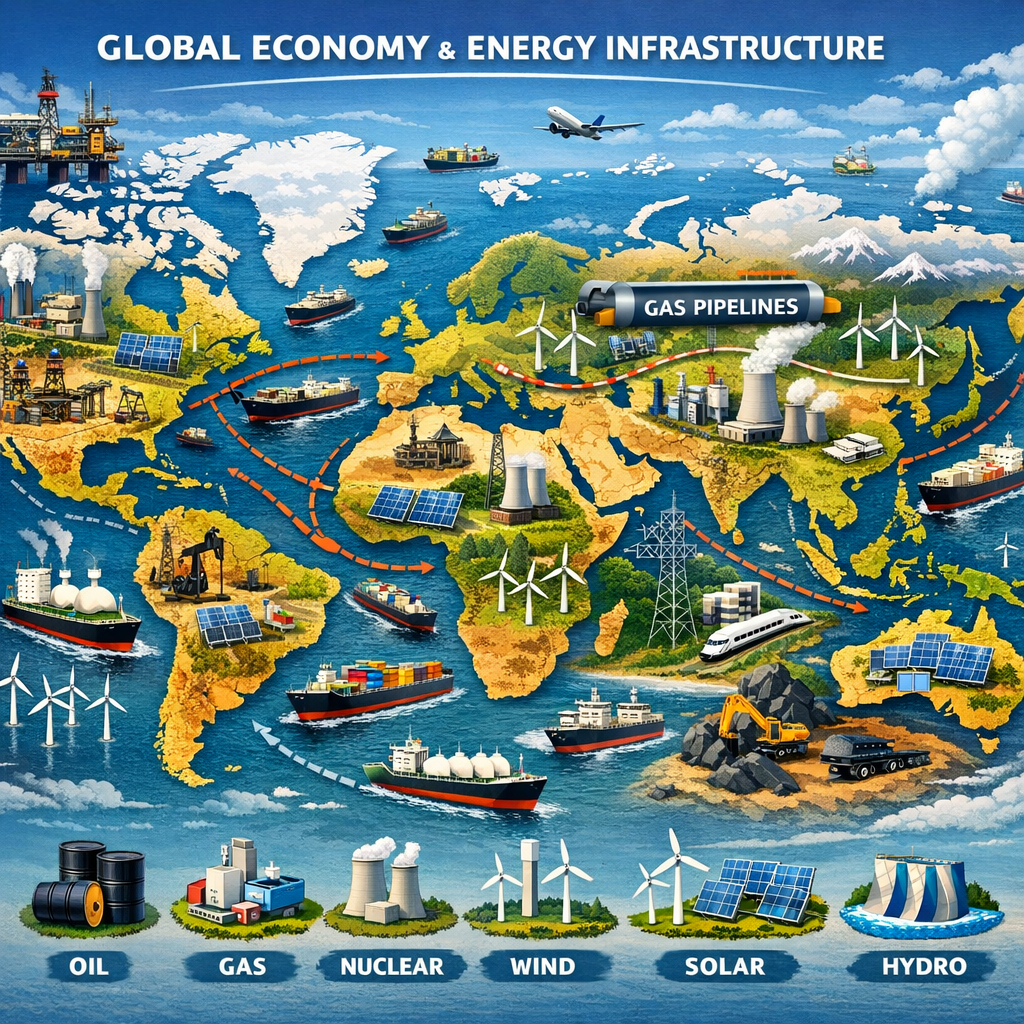
International developments are raising the stakes for economies around the world. Conflict in the Middle East has sparked energy disruptions. Inflation remains stubborn. And although technology—especially artificial intelligence—is powering pockets of growth, many regions face serious headwinds. Here’s a look at what global economic trends mean for humanity today and how people everywhere are feeling the effects.
Slowing Growth and Rising Uncertainty
United Nations analysts now project global economic growth to reach about 2.7% in 2026, a dip from recent years and well under the 3–3.5% expansion once expected.1 Growth next year may tick upward toward 2.9%, but that’s still below pre-pandemic averages. Many low- and middle-income countries face constrained fiscal space and mounting debt challenges. Domestic demand keeps some economies afloat while others—especially in Europe and regions dependent on energy imports—struggle. Inflation, while easing in some places, continues to hit the poorest hardest as food, fuel, and housing costs remain high.2
Energy Turmoil and Geopolitical Shockwaves
The war in the Middle East is deeply influencing global dynamics, particularly in energy markets. Supply constraints and disrupted trade routes have pushed up oil prices. Countries that depend heavily on energy imports are being squeezed, while exporters are dealing with instability and shifting demand.3 The outlook hinges heavily on how soon energy flows stabilize and whether diplomatic efforts succeed in reducing regional conflict. Any prolonged disruption risks worsening inflation, hampering industrial output, and fueling food cost volatility.
Technology’s Role Amid Diversification and Inequality
AI and tech investment continue to be bright spots of growth, especially for economies integrated into global tech supply chains. These gains, however, are not evenly spread. Regions without strong infrastructure or education systems are finding it harder to benefit. Meanwhile, supply-chain disruptions—from political tensions or trade barriers—are making even basic goods costly or difficult to obtain in many places.
Human Impact: Cost of Living, Migration, and Security
For people around the world, the consequences are tangible. Rising food and fuel prices are eroding household budgets. Access to necessities is less stable, particularly in lower-income countries. In places near conflict zones, displacement due to violence is intensifying, and supply disruptions worsen access to essentials.4 There’s also growing pressure on migration, as people seek safety, stability, or simply relief from economic hardship.
What Can Help: Policy, Cooperation, and Resilience
Experts recommend several paths forward:
- Governments should aim for temporary and targeted fiscal support to help vulnerable populations while avoiding long-term debt spirals.
- Investments in renewable energy, energy efficiency, and diversified energy sources can buffer against future energy shocks.
- International cooperation—on trade, climate action, and financial aid—is more essential than ever to avoid further fragmentation.
- Strengthening infrastructure, public health, education, and social safety nets will help countries adapt to pressures ranging from climate to technological change.
While many challenges loom, resilient growth is still possible. The difference may come down to decisions made now—in diplomacy, policy, and investment—that will shape how this period of strain turns into one of renewal.