

By William Smith
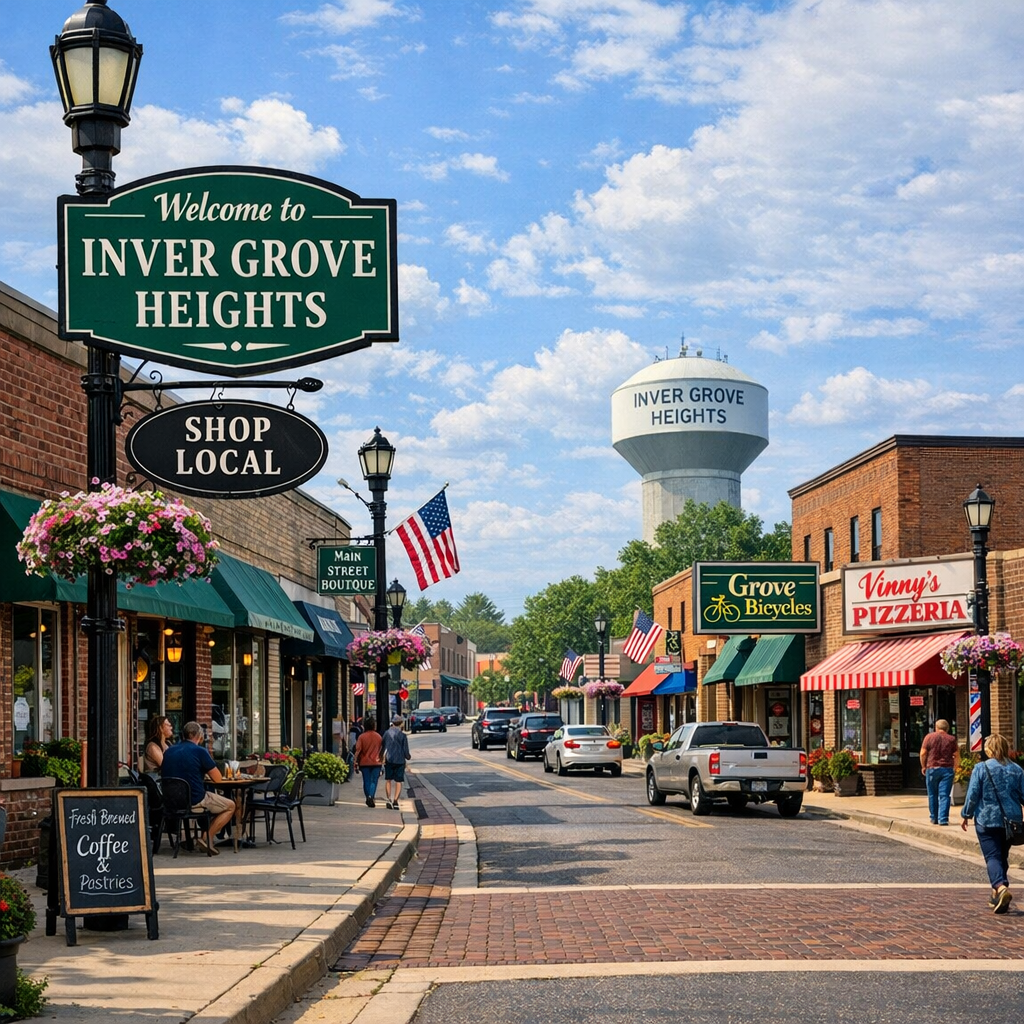
Inver Grove Heights (IGH) is showing traits of a city with solid economic foundations and real potential—for businesses and entrepreneurs alike. With increasing population, high homeownership rates, and available land for commercial development, the backdrop is often favorable. But that doesn’t mean every business sector is thriving equally, or that there aren’t gaps yet to fill.
What’s working: strong base and available opportunities
First, some numbers. IGH’s population is rising modestly—about 3% over recent years—providing a slowly expanding market for goods and services. The median household income runs nearly $92,700, while home ownership sits at 77%. These indicators matter: people with stable homes and incomes tend to shop locally and support small business growth. Also, the city offers a variety of business-friendly amenities—available land, utilities, and improved development maps—which make setting up commercial operations easier than in many suburban areas. (IGH website)
Major employers are centered in sectors such as agriculture supply and processing, education, health care, retail, and local government. CHS Inc., Gertens, and ISD 199 are among the city’s top employers, providing a mix of white-collar and service-industry work. This diversified employment base can offer stability during broader economic shifts. (Wikipedia, City report)
Where gaps remain: retail, density, and land use
Despite those strengths, local surveys and sentiment from residents have repeatedly pointed out noticeable shortcomings in retail and dining options. In many commercial corridors—especially around Target zones, strip malls, and some intersections—empty storefronts are increasingly visible. Citizens report that often they must travel outside the city for quality grocery stores, unique restaurants, or boutique shops. (IGH community survey comments)
One challenge is that Inver Grove Heights lacks the residential density that many retailers prefer. Large sections of the city, especially in its southern part, are semi-rural or low-density residential. Retailers hunt for “rooftops” nearby, and in many cases IGH competitors like Eagan or Woodbury already have strong, established commercial hubs. Geography adds an extra layer, such as the Mississippi River acting as a boundary. (Patch analysis)
Recent policy moves and what they mean for business
Earlier in the year, IGH enacted a moratorium on new data centers. The move reflects growing public concern over high-tech developments’ impacts—energy usage, traffic, utility demands. For developers seeking such projects, this signals regulatory caution. (Biz Journal)
Meanwhile, the Economic Development Authority (EDA), staffed by City Council members, has been active every other month to evaluate and advance development opportunities. The city has recently upgraded its economic development web resources: commercial district spotlights, development maps, demographic profiles—all tools meant to support entrepreneurs and prospective business investment. (IGH EconDev Department)
Where entrepreneurs might find their niche
In filling local gaps, opportunities likely await in specialty retail and food service. Residents have called for more boutique shops, sit-down restaurants beyond chains, and gathering places (cafés, community art or event spaces). Those can often thrive in under-served commercial nodes or near transit corridors.
Smaller, flexible industrial or mixed-use spaces may also hold promise. With commercial rents in certain districts showing reasonable rates, and available parcels still remaining, smaller-scale manufacturing, startups, or production businesses could find cost-effective homes here.
Keys for success in IGH
- Strong physical presence: Locating in visible commercial clusters or filling in gaps in established retail corridors can help avoid the isolation problem many existing storefronts suffer.
- Community alignment: Businesses aligned with local preferences—places that feel hometown or artful, menus that serve local sensibilities—often gain traction more quickly than generic branches.
- Navigating city tools and permitting: Getting to know the Economic Development Authority, using the city’s permit portal, and understanding site plan requirements will help reduce startup delays.
All told, Inver Grove Heights balances opportunity and challenge. The economic base is solid, income levels are strong, and there’s room to grow—but to thrive, businesses will need to be smart about location, fit, and navigating local regulations. For entrepreneurs ready to meet that balance, there’s a real chance to help shape what IGH becomes next.