

By William Smith
Inver Grove Heights sits at an economic crossroads. As the city continues growing in population and infrastructure, several trends are emerging among local business, jobs, and development that will likely define the community’s economy for years to come.
1. Economic Base and Wages
Recent estimates place the Inver Grove Heights ZIP-area economy—with parts including Eagan and South St. Paul—at about 1,683 businesses supporting 26,119 jobs. The average annual wage is roughly $76,000, notably above the county median. These numbers reflect continued economic diversity: healthcare and professional services lead employment sectors, followed by retail, construction, and food & hospitality. Most businesses are quite small—nearly nine in ten have fewer than 20 employees.
2. Growth Pressures and Land Use Dynamics
Inver Grove Heights has land availability in its northwest areas and along major transportation routes, positioning it for more commercial and industrial expansion. Projections prepared under long-range planning anticipate steady increases in employment as undeveloped sites are built out.
3. Data Center Debate
One of the most visible flashpoints in local economic development is the proposed data center project at 5842 Carmen Avenue East. The City Council approved a one-year moratorium on data-center development—including the current proposal—after concerns raised by residents. Yet an exemption was later granted to allow this particular proposal to be considered via a major site plan.
The moratorium reflects broader questions over zoning, environmental assessment, utility load, and how large-scale facilities align with community priorities. Developers and residents alike await the site plan hearing to determine whether this proposal will move forward under city requirements.
4. Small Business and Local Employers
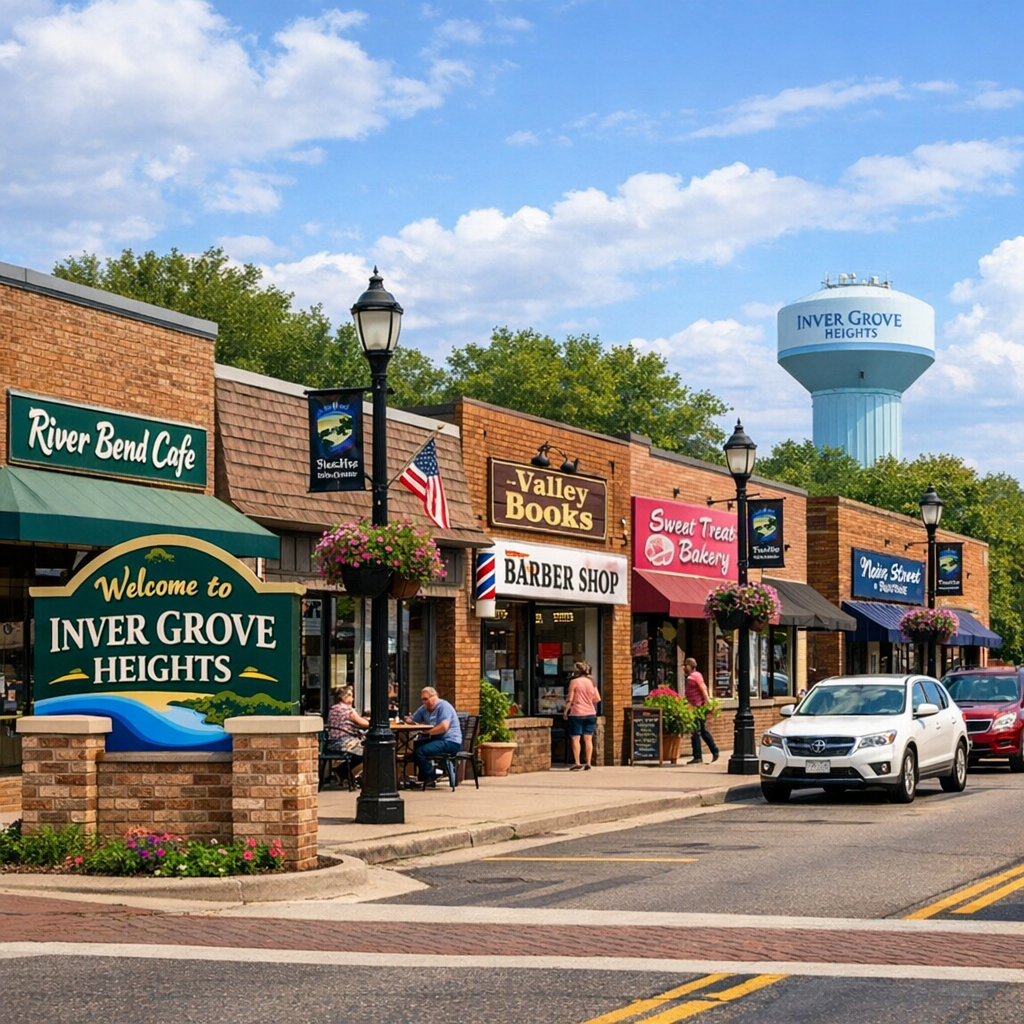
While large employers remain key anchors—such as CHS Inc., Gertens, and local school districts—much of the city’s job growth and creativity comes from small, home-based, or micro businesses. These businesses thrive in commercial districts or near transit corridors. The city’s economic-development office has been expanding resources to support such enterprises, with maps of opportunity sites, commercial district spotlights, and permitting assistance.
5. Income, Population, and Community Profile
Demographically, Inver Grove Heights has about 36,500 residents in recent years. Median household income is around $100,000, with per capita income also above metro and state averages. Poverty rates are relatively low. These factors contribute to a stable consumer base for local retail, services, and small business support.
What It Means Moving Forward
For entrepreneurs and job-seekers alike, these trends offer both opportunity and challenge. Available land and infrastructure make it possible to start or expand businesses, especially in smaller, dispersed ventures. But proposed large-scale developments—such as data centers—show how essential it is to balance economic ambition, community feedback, environmental factors, and quality of life.
City leadership will play a crucial role in zoning decisions, economic incentives, and administrative capacity. Continued growth in wages and home-based work will further shift what business-support services are most needed—from small-business financing to permitting transparency, infrastructure upgrades, and workforce training.
Take-aways for Local Stakeholders
- Keep an eye on the Carmen Avenue data center application and upcoming City Council actions—it may set precedents for how large industrial projects are handled.
- Support and invest in small business incubators, neighborhood commercial zones, and micro-business financing.
- Ensure infrastructure—roads, utilities, broadband—keeps pace with growth, especially in Northwest expansion areas.
- Advocate for transparent permitting, environmental oversight, and inclusion of public input in major development decisions.
Inver Grove Heights isn’t simply growing—it’s changing. For those in business and economic planning, that change brings possibilities, and responsibilities, to shape how and what the future economy of the city will look like.