

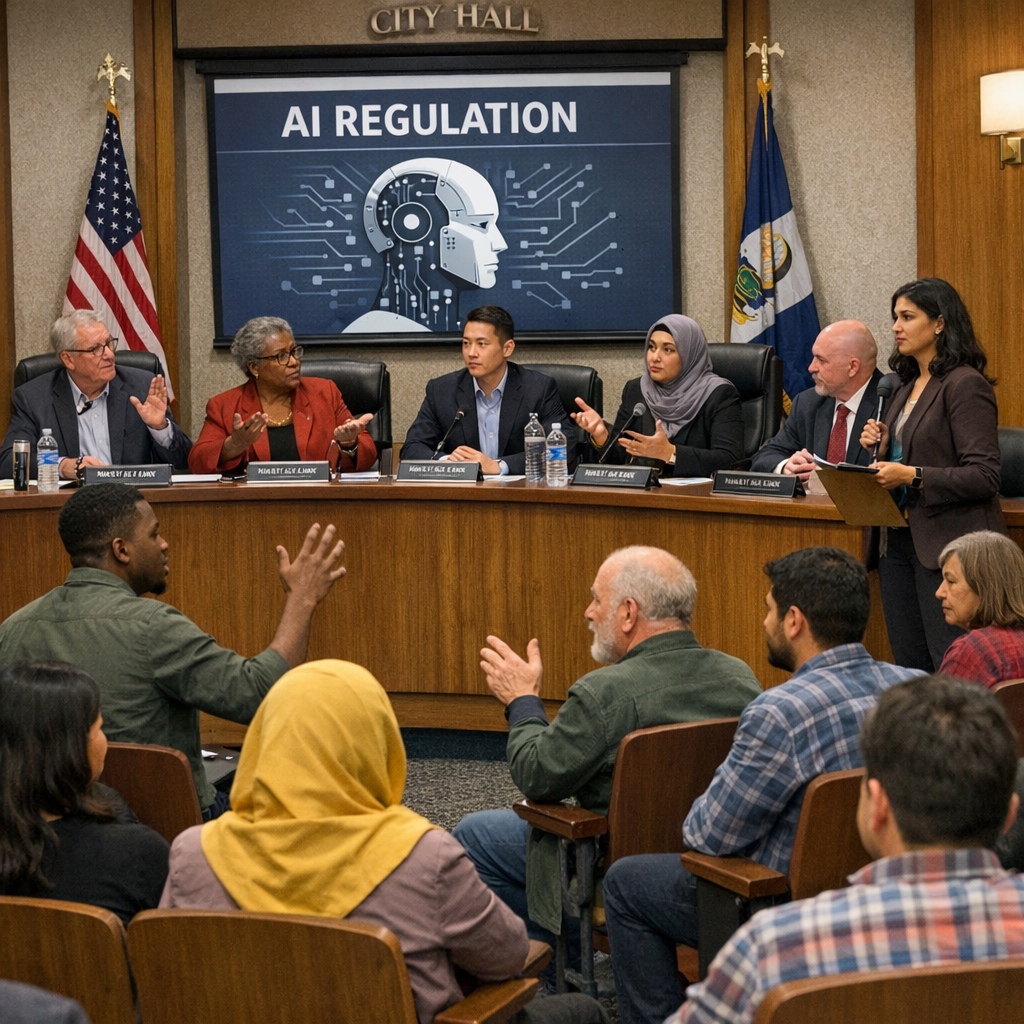
Artificial intelligence is no longer just science fiction—it’s a fast-moving reality creating global tension. From Europe to Asia to the U.S., countries are updating laws to keep up with AI’s power. These changes aren’t abstract. They affect everyday choices about privacy, jobs, governance—and how communities like ours stay safe and responsible in a connected world.
What major players are doing now
European Union
The EU launched sweeping, horizontal rules through the AI Act, which began to apply in stages starting August 2026. Companies handling AI systems considered “high-risk” now face strict oversight including requirements for safety, transparency, and significant penalties for non-compliance. These regulations represent one of the world’s first comprehensive legal frameworks for governing AI.
United States
The U.S. continues to rely on a mix of federal executive orders and state-level laws. While Congress has yet to pass a yet unifying federal act, several states (for example Illinois) are enacting meaningful laws requiring risk assessment, independent audits, and protections against deceptive or harmful AI outputs.
China, Japan, South Korea and beyond
Rather than a single master plan, China has crafted sector-specific binding rules targeting risks like AI in content generation, finance, and public opinion, under continuing regulatory guidance. Japan and South Korea both favor lighter or innovation-friendly frameworks, with strong government guidance, ethics rules, and growing expectations for accountability.
Global trends — where lines are being drawn
High-risk vs low-risk systems
Regulators around the world are defining what “high risk” means: systems tied to people’s safety, public institutions, or law enforcement. Those get more scrutiny: audits, transparency requirements, third-party review. Low-risk tools may face lighter rules.
Accountability and liability
Many laws are pushing toward holding firms legally and financially responsible when AI causes harm—bias, privacy violations, deepfake exploitation, or dangerous outcomes. This is new territory for courts and regulators.
Transparency and human oversight
Regulators are demanding that AI systems be more open: clear rules about data use, identifying AI-generated content, human-in-the-loop review for decisions that affect individuals. Some policies are also exploring licensing or international standards.
Why this matters in Inver Grove Heights and beyond
@ local businesses, schools, city officials—AI touches us all. If global regulation tightens, tools used in local contexts—like predictive analytics, facial recognition, ChatGPT-style services—may be subject to compliance demands. That could mean investments in safer software, documentation, or changes in vendor contracts.
On the flip side, stronger regulation could help protect residents: prevent privacy abuse, algorithmic discrimination, or misuse of AI in public safety that lacks oversight. Transparent tools could empower citizens who want to understand how decisions that affect them are made.
What to watch next
- How U.S. federal laws evolve—whether Congress will pass comprehensive AI legislation bringing consistency across states.
- How enforcement works. Laws are only as good as their implementation—auditors, regulatory bodies, and courts will play big roles.
- International cooperation. AI is borderless; global forums or treaties could set baseline standards that help avoid loopholes and misuses.
The dialogue around AI regulation is moving fast—but it’s not too late for citizens and communities to engage. Local conversations, ethical design, public transparency—these matter. Even as the law catches up, our collective voice helps shape the shape of tomorrow’s rules.