

By Michael Williams
A growing sense of power in community
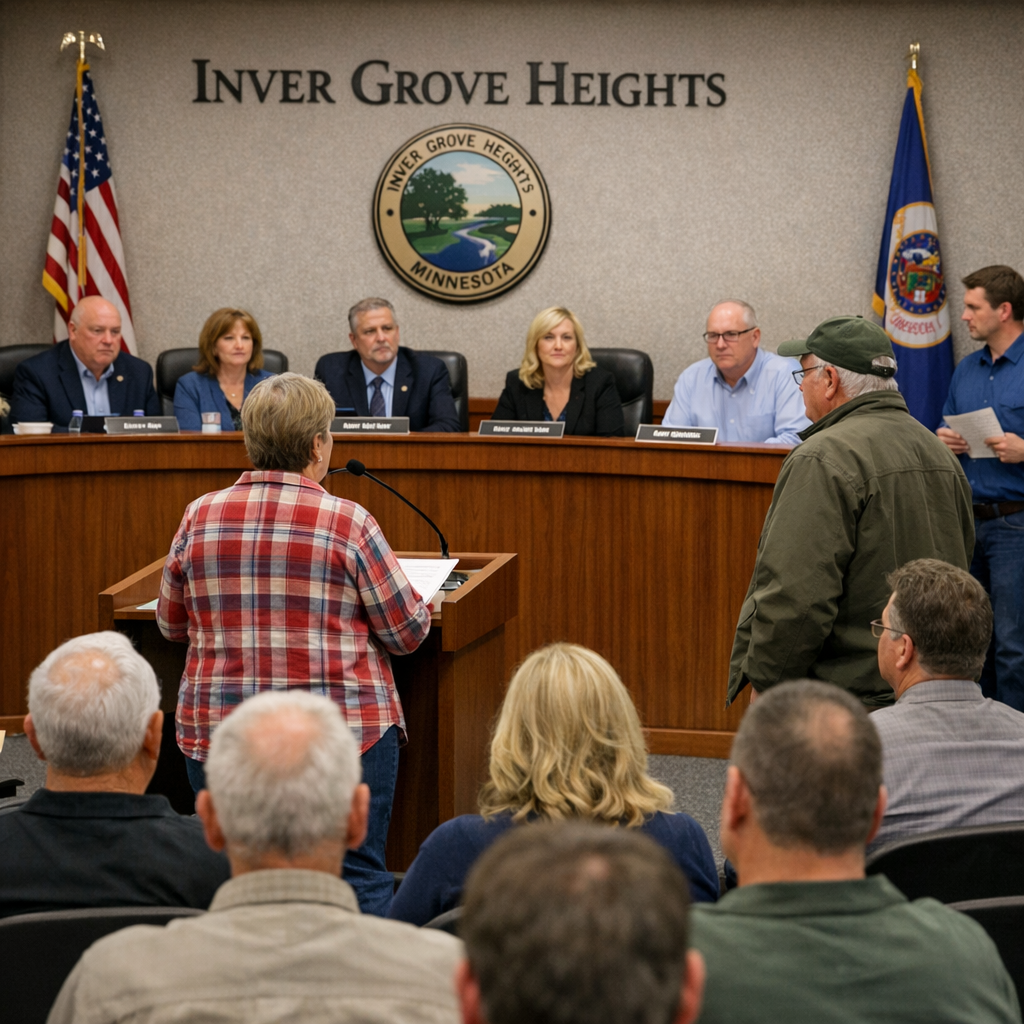
In Inver Grove Heights, there’s a sense lately that people’s voices really do make a difference. The debate over the proposed data center is just one example. In June, the City Council voted 3-2 to enact a moratorium on data center construction after residents raised concerns about environmental impacts, noise, home values, and lack of public input. The decision happened despite the project developer threatening legal action. That vote marked a turning point — citizens organizing through petitions, public comment, and a demand for an Environmental Assessment Worksheet showed how local engagement shapes outcomes. igH’s leaders were pushed into listening. igH’s leaders were pushed into listening.
The straw that stirred the city council chamber
Kari Lundberg, a resident of more than a dozen years, became a focal point of this push. She gathered over 700 signatures on a petition calling for review and better transparency — not only for this data center proposal but for setting a precedent. Her activism tapped into broader concerns: that city codes are outdated, that residents feel decisions are made without full awareness of community costs, and that long-term wellbeing deserves as much attention as density or commerce.
The many ways voices are being heard
- Volunteer efforts: Retirees like Tammy and Cleone have been stepping into roles in local programs — reading with students, helping seniors, participating in library initiatives. These quiet contributions build connection and strength where small acts add up.
- Public feedback channels: City surveys, commission meetings, and newsletters are increasingly used by residents to report concerns, suggest improvements, and engage around services like parks, beautification, retaining business storefronts, and environmental protection.
- Youth engagement: Coalitions like SPARC (Spartan Prevention, Advocacy & Resource Coalition) are working directly with middle- and high-schoolers. The message: young people are not just future residents — many are speaking up now.
- Desire for character, not just growth: Many in IGH appreciate its open land, natural settings, affordable housing, schools, golf course, and parks. At the same time, there’s concern about overbuilding, traffic, stormwater, loss of trees — and a sense that “progress” sometimes overlooks what drew people here in the first place.
Why this matters beyond a single issue
Community voice doesn’t just change one project — it shapes values. When voices are heard, it brings changes in city policy, environmental review processes, and even in how council meetings are scheduled and how accessible they are. That light of transparency helps build trust between city staff, elected officials, and people who live here.
What still needs work
No community is perfect, and IGH is no exception. Many feel more needs to be done to bridge gaps between city leadership and residents who don’t always have time or means to show up. Better communication — in formats people can actually use — and more equitable representation on commissions and planning discussions remain key. And long-range planning — not just reacting to issues — will decide how well IGH balances growth, character, and sustainability.
Looking forward
Inver Grove Heights is showing signs of a turn: where people feel empowered to speak up and where city government seems to be listening more. For residents, this means continuing to stay alert, engaged, and proactive. For leaders, it means maintaining openness, accountability, and making sure the decisions reflect what people here truly value. That’s how a community not only grows, but thrives.