

By Olivia Johnson
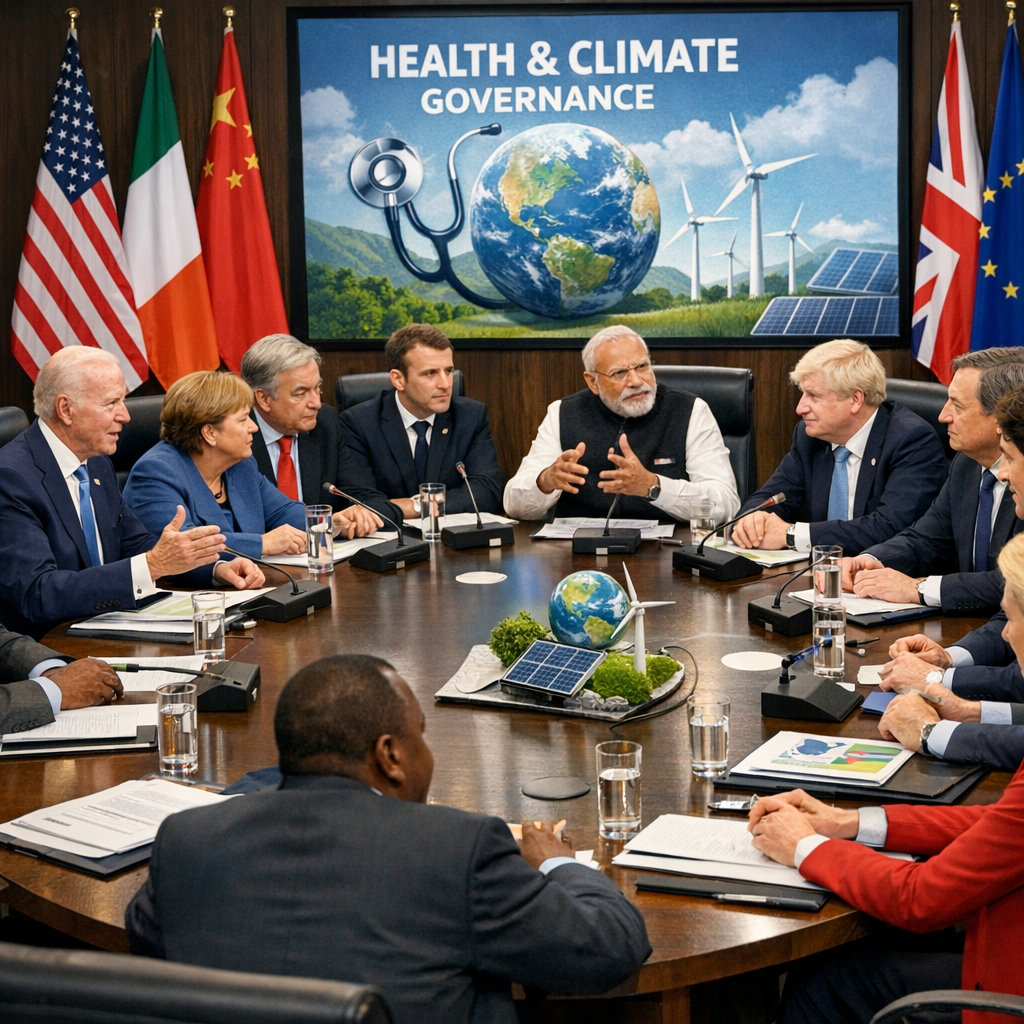
As our world faces intertwined challenges—pandemics, climate change, environmental degradation—international efforts are evolving. From health governance reform to renewed climate action frameworks, recent developments offer both hope and hard lessons. For readers in Inver Grove Heights and beyond, these shifts are shaping what resilience, cooperation, and responsibility look like on a global scale.
Reforming Global Health Governance
The global health community is undergoing notable reforms aimed at making institutions more responsive and equitable. A centerpiece is the reform of the Global Health Architecture (GHA), driven by proposals from the World Health Organization and partner agencies. Key aims include strengthening coordination across global, regional, and country levels; clarifying roles and responsibilities; and aligning support more directly with national priorities. The World Health Assembly recently endorsed a joint, inclusive process led by Member States to explore and implement these changes. The process includes forming a multi-stakeholder Task Force to guide transformation efforts.
Another major milestone is the WHO Pandemic Agreement, officially adopted in 2025, which marks one of the most comprehensive international treaties for preventing, preparing for, and responding to pandemics. Its forthcoming annex on Pathogen Access and Benefit-Sharing (PABS) is expected to define global norms around sharing pathogen-related resources and benefits, including in vaccine development. Alongside that, ongoing efforts around the International Health Regulations and the Pandemic Fund are helping build stronger capacities in surveillance, diagnostics, and health security in many countries.
Turning Climate Commitments into Concrete Action
Climate diplomacy is also moving forward in ways that emphasize implementation. The Global Climate Action Agenda and the Marrakech Partnership are key drivers, having launched a new work programme focused on delivering results rather than just making commitments. Their work includes strengthening initiatives around clean energy, food security, zero waste, and resilience.
Another significant part of this evolution is the expansion of climate transparency and reporting mechanisms. More nations are submitting nationally determined contributions (NDCs), adaptation plans, and transparency reports aimed at tracking progress under the Paris Agreement. Yet while participation has increased, the overall pace of action and ambition in current commitments still fall short of the levels needed to limit global warming to 1.5 degrees Celsius.
Why Citizens Everywhere Should Pay Attention
These global changes may seem distant, but their effects ripple into every community—including ours. Stronger health governance helps prevent future pandemics from overwhelming local systems; transparent climate action frameworks affect energy costs, job growth, and environmental health.
For Inver Grove Heights and other communities across Minnesota, engagement matters—especially around policy advocacy, investment in public health, and sustainable planning. Decisions made in international fora can influence whether climate goals materialize locally, whether funding aligns with climate justice, and whether health systems are equipped to respond to threats.
Challenges That Remain
Despite momentum, important gaps still persist. Some countries lack the resources or capacity to meet reporting requirements. Others struggle with matching ambition to deliverable policies. And for many people, especially those in lower-income regions, equity gaps still impose unfair burdens.
Ultimately, progress on these fronts depends not only on governments and international organizations—but on sustained citizen awareness and participation. Let’s keep watching, learning, and advocating, because the decisions of today will define the shared world of tomorrow.