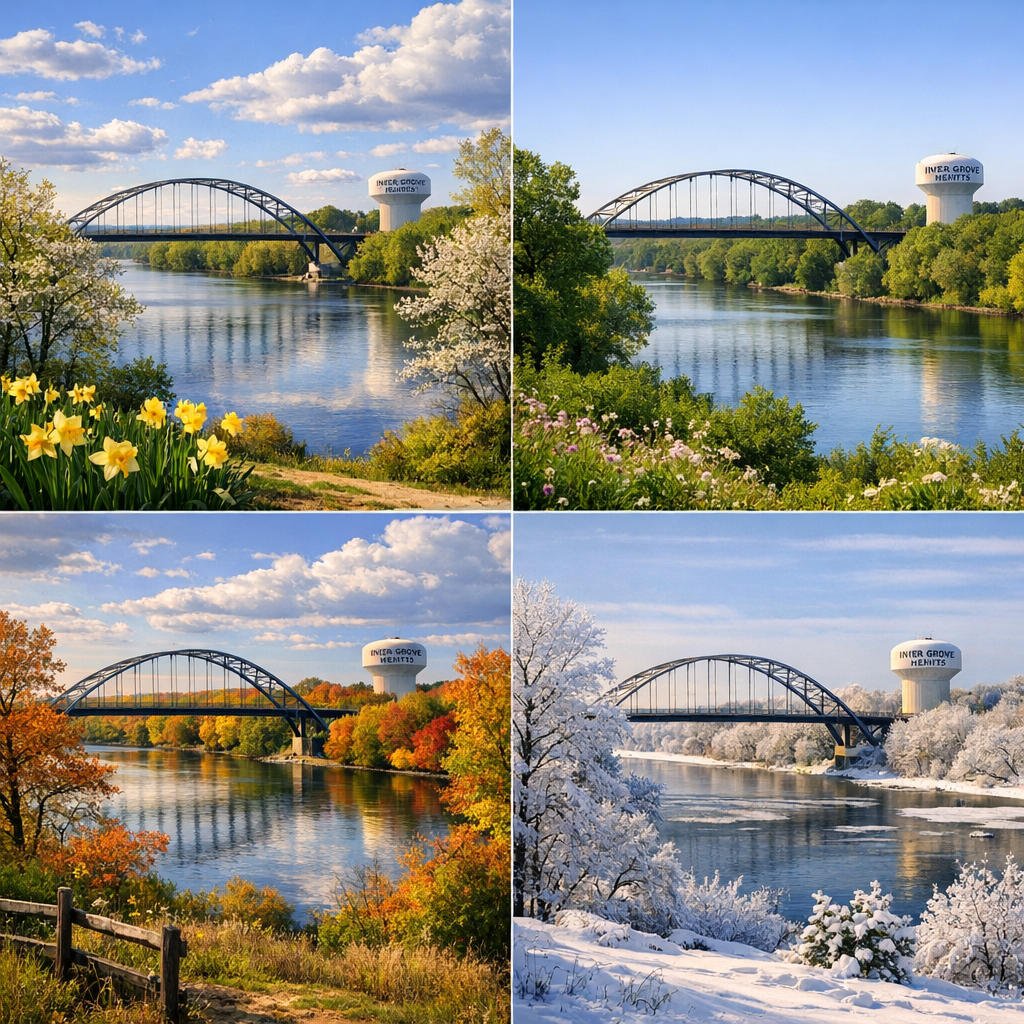
Inver Grove Heights, Minnesota, experiences a Humid Continental Mild Summer climate, characterized by significant seasonal variations that influence both daily life and the local environment.
Seasonal Temperature Variations
Residents encounter a wide range of temperatures throughout the year. Winters are notably cold, with average low temperatures around 10°F (-12°C) in January, the coldest month. Summers, in contrast, are warm and humid, with average high temperatures reaching approximately 82°F (28°C) in July, the warmest month. This substantial temperature fluctuation between seasons is a hallmark of the region’s climate.
Precipitation and Snowfall
Annual precipitation averages about 34.2 inches (869 mm), distributed fairly evenly throughout the year. Snowfall is a significant component of the winter season, with snow typically falling from October through May. February often records the highest snowfall, averaging around 5.91 inches (150 mm). These snowfalls contribute to the region’s winter landscape and impact various activities and services.
Growing Season and Plant Hardiness
The growing season in Inver Grove Heights spans from late April to early October, providing approximately 150 to 180 frost-free days. The area falls within USDA Plant Hardiness Zone 5a, indicating that plants must withstand minimum temperatures between -20°F to -15°F (-29°C to -26°C). Gardeners and farmers plan their activities around these parameters to ensure successful cultivation.
Environmental Considerations
The Environmental Advisory Commission (EAC) in Inver Grove Heights plays a pivotal role in addressing local environmental issues. This nine-member citizen commission reviews matters such as land alteration permits, wetland replacement applications, and landfill concerns. The EAC also promotes public awareness and understanding of environmental topics, ensuring that the community remains informed and engaged in sustainable practices.
Understanding the climate and seasonal patterns of Inver Grove Heights is essential for residents and visitors alike. This knowledge aids in preparing for weather-related challenges and appreciating the natural beauty that each season brings to the region.