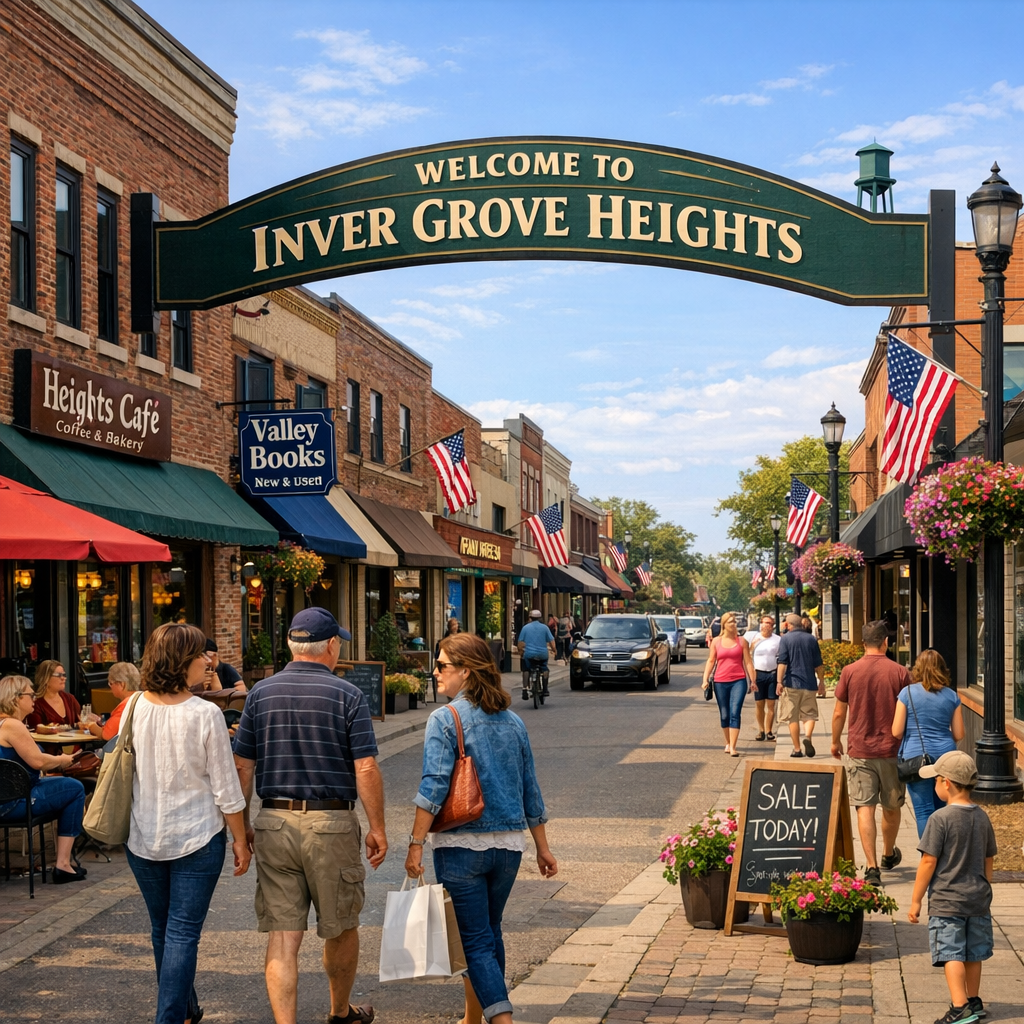
Inver Grove Heights, Minnesota, has emerged as a dynamic community characterized by a robust economy and a diverse array of local businesses. This city seamlessly blends residential charm with commercial vitality, making it an attractive destination for both entrepreneurs and residents.
Economic Landscape
The city’s economic health is evident in its impressive median household income of $101,316, surpassing the national average. This financial stability fosters a supportive environment for local businesses and encourages entrepreneurial ventures.
Housing Market Trends
The housing market in Inver Grove Heights reflects the city’s economic strength. As of May 2026, the median sale price for homes reached $380,000, marking a 2.6% increase from the previous year. Homes typically sell within 32 days, indicating a competitive market that appeals to both buyers and sellers.
Local Business Spotlight
The city is home to a variety of businesses, ranging from family-owned establishments to major corporations. Notably, CHS Inc., a Fortune 100 company, and Gertens, a renowned gardening center, have established their presence here, contributing significantly to the local economy.
In addition to these larger entities, Inver Grove Heights supports a vibrant small business community. For instance, Cuppa More Pages, a unique bookstore café that operates as a life-sized Little Free Library, invites patrons to take or leave books while enjoying a cup of coffee. This innovative concept has quickly become a beloved spot for residents and visitors alike.
Community and Growth
With a population of approximately 36,984, Inver Grove Heights continues to experience steady growth. The city’s commitment to fostering a connected community is evident through various events and volunteer opportunities that keep residents engaged and invested in their surroundings.
Inver Grove Heights stands as a testament to balanced growth, where economic development and community well-being go hand in hand. Its thriving local businesses, strong housing market, and engaged population make it a model for sustainable urban development.