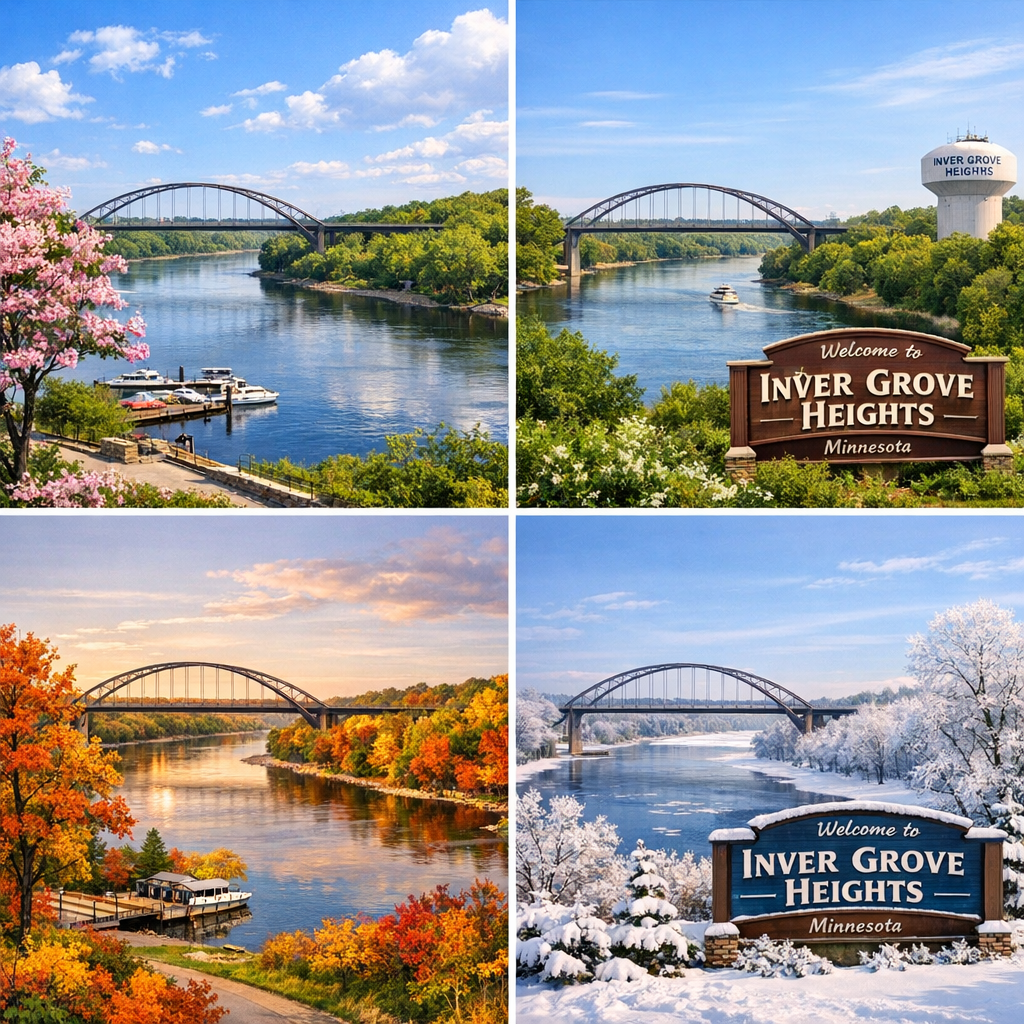
Inver Grove Heights, Minnesota, experiences a humid continental climate characterized by significant seasonal variations. Understanding these patterns is essential for residents and visitors alike.
Seasonal Temperature Variations
The city witnesses a wide range of temperatures throughout the year. Winters are typically cold, with average lows around 10°F in January, while summers are warm, averaging highs of 82°F in July. Such fluctuations necessitate preparedness for both extreme cold and heat.
Precipitation and Snowfall
Annual precipitation averages approximately 34 inches, with June being the wettest month, receiving about 5 inches of rainfall. Snowfall is common from October through May, accumulating to an average of 24 inches annually. February often records the highest snowfall, averaging around 6 inches.
Growing Season and Plant Hardiness
The growing season in Inver Grove Heights typically spans from late April to early October, offering about 150-180 frost-free days. The area falls within USDA Plant Hardiness Zone 5a, indicating that plants should be selected based on their ability to withstand minimum temperatures between -20°F and -15°F.
Environmental Considerations
Residents are encouraged to stay informed about local environmental issues and participate in community initiatives. The Environmental Advisory Commission meets as needed on the fourth Thursday of each month to discuss topics such as land alteration permits and wetland replacement applications. These meetings are open to the public and provide a platform for community engagement.
By understanding the local climate and actively participating in environmental stewardship, residents can contribute to the sustainability and resilience of Inver Grove Heights.