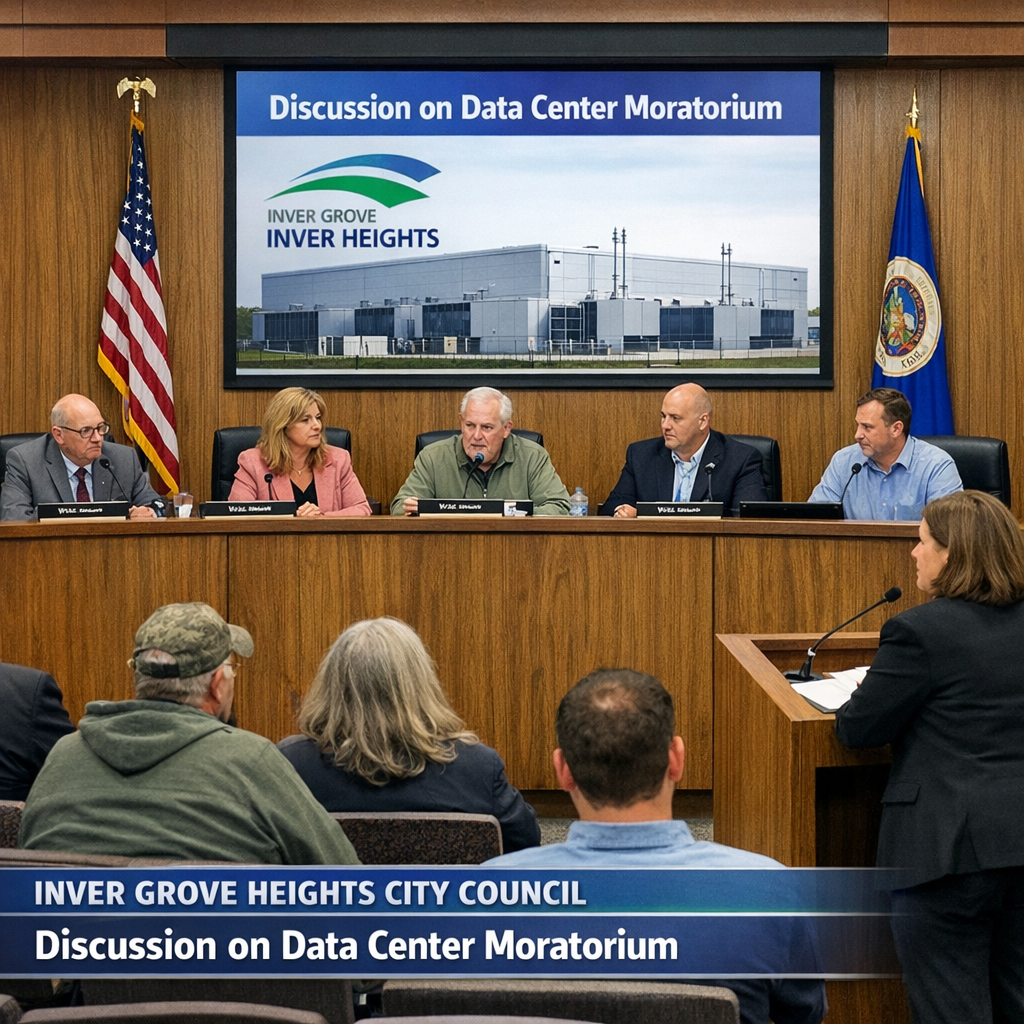
In a recent decision, the Inver Grove Heights City Council approved a one-year moratorium on data center developments within the city. This pause aims to allow city officials to thoroughly study the potential long-term impacts of such facilities on the community.
Background and Decision
The moratorium was passed with a narrow 3-2 vote during a council meeting held on May 11, 2026. The decision was prompted by a proposed data center project on the former Travel Tags site located on Carmen Avenue. The developer, California-based Fortress Investment Group, had planned a 5-megawatt facility utilizing closed-loop cooling systems, with water usage comparable to that of a few residential homes.
Despite the developer’s assurances, residents expressed concerns about potential noise, increased water and electricity consumption, and overall environmental impact. The council’s decision to implement the moratorium reflects a desire to balance economic development with the well-being of the community.
Community Response
The council’s decision has elicited mixed reactions from the community. Some residents appreciate the proactive approach to studying the impacts of data centers, while others are frustrated by the lack of public comment before the vote. Labor groups have voiced support for data center projects, citing job creation and economic benefits.
Next Steps
During the moratorium, city officials will conduct a comprehensive study to assess suitable locations, zoning regulations, and potential environmental impacts of data centers. This period will also provide an opportunity for community engagement and input to ensure that future developments align with the city’s goals and residents’ interests.
Inver Grove Heights joins other Minnesota communities, such as Eagan and Rosemount, in pausing data center developments to better understand their implications. The outcome of these studies may set precedents for how suburban areas manage the growth of data centers amid the expanding digital economy.