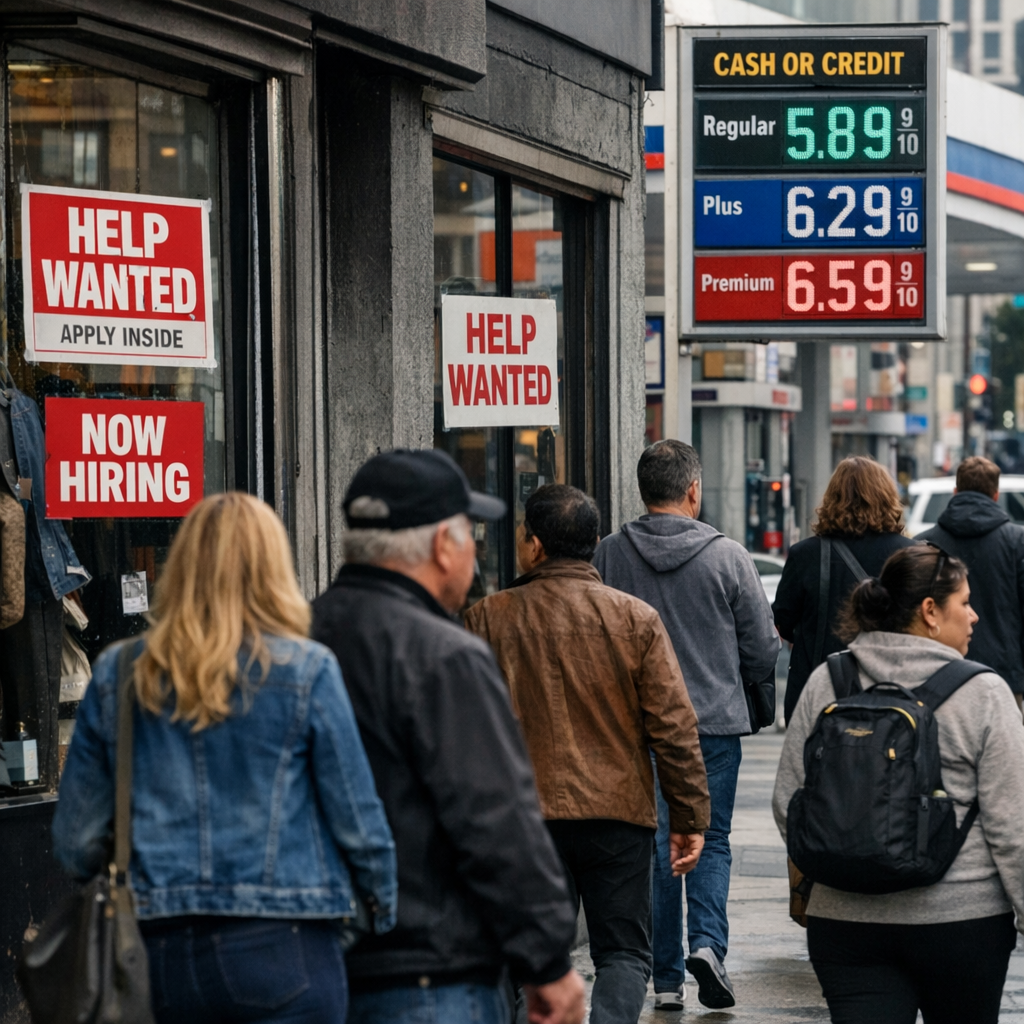
The United States economy is currently experiencing a complex interplay of factors influencing its trajectory. Recent data indicates a mix of resilience and challenges across various sectors.
Employment Trends
In May, the U.S. economy added 172,000 jobs, showcasing a rebound from previous months. This uptick suggests a degree of resilience despite ongoing economic uncertainties. However, long-term unemployment remains a concern, with a growing number of individuals seeking work for extended periods.
Inflation and Consumer Prices
Inflation has been a persistent issue, with the Consumer Price Index (CPI) reflecting a 3.8% increase in April, marking the highest rate in nearly three years. This rise is attributed to various factors, including elevated energy costs and supply chain disruptions. Notably, gasoline prices have surged, averaging over $4.50 per gallon nationally, with some states exceeding $5.00. These increases are partly due to geopolitical tensions affecting global oil supply chains.
Impact of International Events
Recent military actions, such as the U.S. strikes against Iran, have had significant economic repercussions. These events have disrupted oil flows through critical channels like the Strait of Hormuz, leading to increased fuel prices and contributing to broader inflationary pressures. The administration has acknowledged these challenges and is exploring measures to stabilize the situation.
Public Sentiment and Political Implications
Public approval of the administration’s handling of economic issues has declined. A recent Reuters/Ipsos poll indicates that 70% of Americans disapprove of the current approach to managing the cost-of-living crisis. This sentiment is influencing political dynamics, with upcoming midterm elections likely to be shaped by economic concerns.
Looking Ahead
As the nation navigates these economic challenges, policymakers are focusing on strategies to bolster job growth, manage inflation, and address the impacts of international developments. The coming months will be critical in determining the effectiveness of these efforts and their influence on the broader economic landscape.