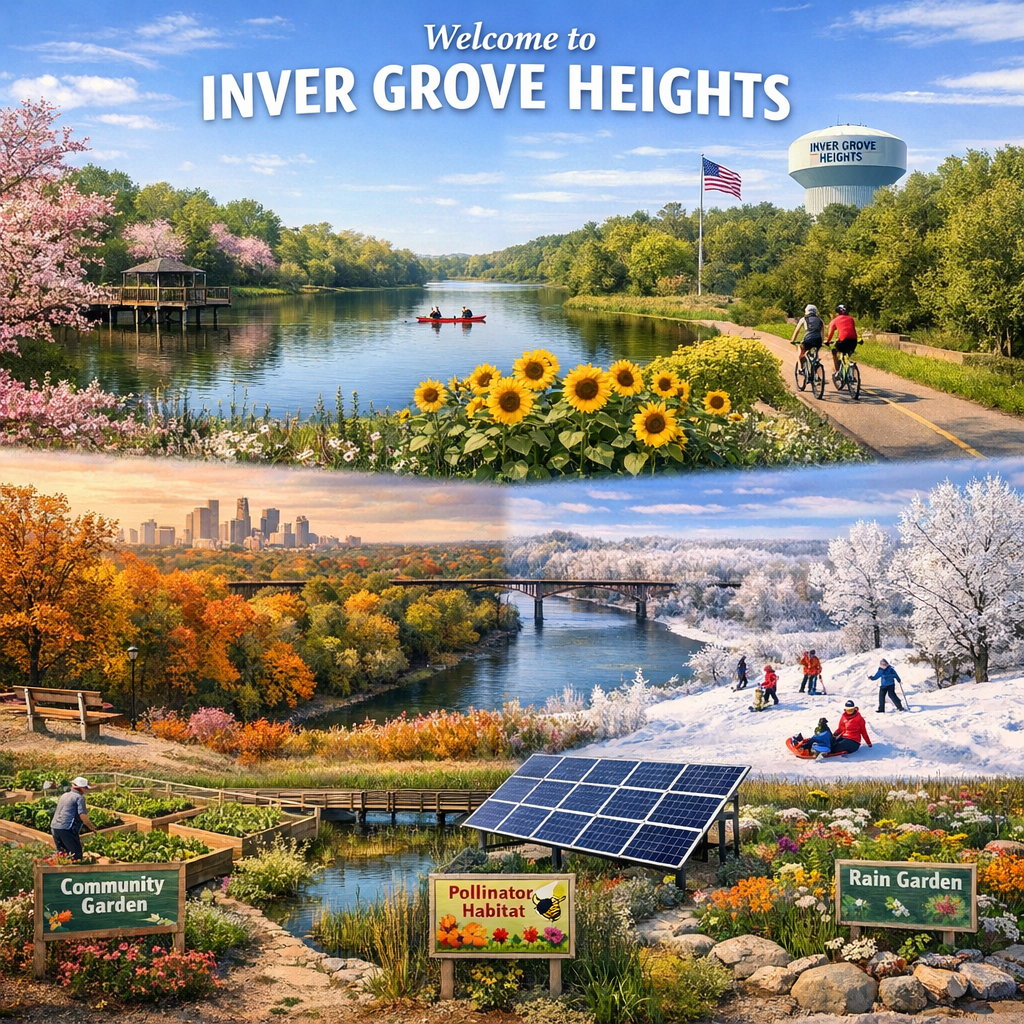
Inver Grove Heights, Minnesota, experiences a diverse climate characterized by distinct seasonal changes. Understanding these patterns is essential for residents and visitors alike.
Climate Overview
The city has a humid continental climate, featuring warm, wet summers and cold, snowy winters. Average temperatures range from lows of 10°F in January to highs of 82°F in July. Annual precipitation averages around 34 inches, with June typically being the wettest month.
Seasonal Highlights
- Spring (March-May): Temperatures gradually rise, with average highs reaching 68°F by May. This season sees increased rainfall, averaging 4.25 inches in May.
- Summer (June-August): Warm and humid conditions prevail, with July being the hottest month. June often records the highest rainfall, averaging 5.04 inches.
- Fall (September-November): Cooler temperatures return, with average highs dropping to 42°F by November. Precipitation decreases during this period.
- Winter (December-February): Cold and snowy conditions dominate, with January being the coldest month. Snowfall averages around 4.13 inches in January.
Environmental Initiatives
Inver Grove Heights is committed to environmental sustainability through various initiatives:
Sustainable IGH Awards
Launched in June 2024, the Sustainable IGH Awards recognize residents and businesses implementing sustainable practices such as energy conservation, water efficiency, and pollinator-friendly landscaping. The program aims to inspire community-wide environmental stewardship.
Environmental Advisory Commission
The Environmental Advisory Commission (EAC) advises the City Council on environmental issues, including land use and conservation efforts. The EAC promotes public awareness and understanding of local environmental concerns.
Darvan Acres Nature Center
Established in 1976, Darvan Acres Nature Center serves as a sanctuary for native plants and animals. Spanning over 220 acres, the center offers hiking trails, birdwatching opportunities, and educational programs focused on conservation and environmental awareness.
By understanding the local climate and participating in these initiatives, residents can contribute to a more sustainable and environmentally conscious community.